Skirts worn with pointe shoes almost always mean one specific garment, the tutu, though the phrase gets searched by people with very different goals in mind. Some are ballet parents shopping for a recital, some landed here off a crossword clue, and plenty are here because balletcore keeps putting tulle skirts back into regular rotation. This guide covers what actually gets worn with pointe shoes on a professional stage, why that is not the same thing as what belongs in a real closet, and how to translate the silhouette into a skirt you would genuinely reach for. By the end, you will know the difference between a rehearsal skirt and a performance tutu, and exactly how to style a tulle skirt with shoes you already own.
Short Answer
The skirt worn with pointe shoes is the tutu, whether that means a stiff classical tutu, a soft romantic tutu, or a simple mesh rehearsal skirt. Pointe shoes themselves are professional equipment, not something styled with everyday clothing, so the real-world version of this look uses tulle skirts paired with ballet flats instead.
What Skirt Is Actually Worn With Pointe Shoes
Ballet has answered this question the same way for nearly two centuries, and the answer is the tutu. Three versions show up on professional stages today, and each one serves a different purpose. The classical tutu, sometimes called a pancake or platter tutu, sits stiff and horizontal from a wire hoop and is built for variations where the audience needs a clear view of the legs and pointe work. The romantic tutu hangs several inches below the knee in soft layers of tulle or English net, a shape that traces back to the romantic ballet era of the 1830s, around the same period pointe work itself started taking its modern form.
Rehearsal skirts complete the trio, and they are the piece most dancers actually live in day to day. A rehearsal skirt is a simple pull-on wrap or elastic-waist skirt in mesh, chiffon, or jersey, cut short enough to keep the legs visible to a teacher correcting technique. It has none of the structure of a performance tutu and costs far less, since a custom classical tutu built for a company can run into the hundreds of dollars while a rehearsal skirt sits closer to what you would pay for a basic knit top.
The Pointe Shoe Assumption Worth Correcting
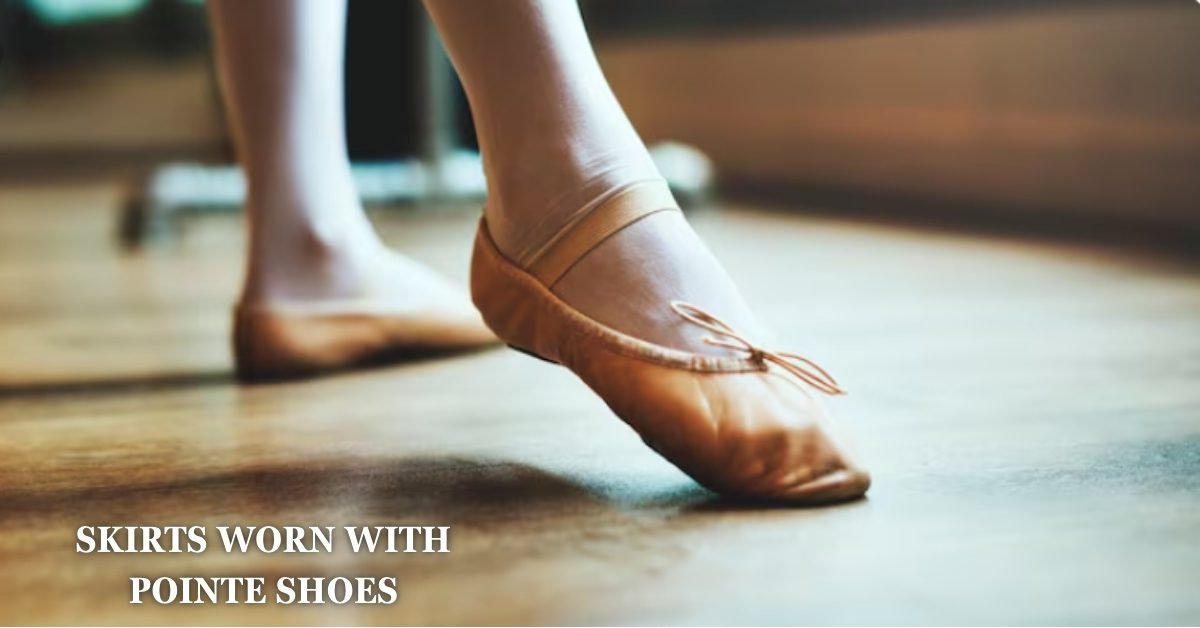
Here is where this exact phrase leads people astray. Pointe shoes are not a fashion accessory in the way ballet flats are, they are a piece of equipment built around a hard box at the toe and a stiff shank under the arch, fitted individually to a dancer’s foot after years of ankle and core strength training. A dancer typically does not go on pointe until her technique and bone development are ready, generally not before the early teens, and even then the shoes get sewn with ribbons and elastic specific to that dancer before every performance.
None of that translates to a sidewalk or a dinner outfit, which is why nobody genuinely styles pointe shoes the way they style ballet flats, loafers, or sneakers. The confusion almost always comes from ballet flats, the soft, ribbon-tied shoe that shares pointe shoes’ pink satin and cross ribbons but none of their internal structure. When someone wants a skirt to pair with pointe shoes in real life, what actually solves the outfit is a tutu-inspired skirt paired with ballet flats, not the performance shoe itself.
How the Tutu Translates Into a Skirt You’d Actually Wear
Fashion has been borrowing the tutu’s silhouette for longer than most people realize, and it shows up across two very different price tiers. At the high end, designers like Molly Goddard built a signature around voluminous tulle, with skirts and dresses that regularly sell in the hundreds of pounds and turn up on red carpets and at fashion week. At the accessible end, brands like Uniqlo, ASOS, and Reformation sell mini and midi versions in nylon tulle or soft mesh for well under a hundred dollars, cut closer to the body than a stage tutu so they actually sit right for regular wear.
The fabric choice matters more than most guides mention. Stiff nylon tulle holds the classical tutu’s structure and photographs well, but it can feel scratchy against bare legs and tends to read costumey outside of a themed event. Soft tulle, mesh, or a tulle layer over a slip lining reads much closer to the romantic tutu, drapes with movement, and is the version that actually works for daytime or evening wear without looking like it wandered out of a dance studio.
Styling a Tutu-Inspired Skirt With Shoes You’ll Actually Wear
Ballet flats are the obvious pairing, and for good reason, the low profile keeps the leg line long under a full or midi tulle skirt the same way a slipper does under a stage tutu. Brands like Repetto and Bloch, both born out of actual dance shoe manufacturing, translate that shape into street-ready flats with more sole and support than a class shoe. Pair a black or nude flat with a black tulle mini and a fitted turtleneck for a look that reads polished rather than costumed, and save the pastel satin flats for a tulle skirt in a matching soft color.
Cooler months call for a different shoe entirely. A chunky loafer or a low combat boot under a midi-length tulle skirt breaks up the sweetness of the fabric and keeps the outfit from reading too literal, a pairing most balletcore guides skip because they stay locked into flats. Add opaque tights and a cropped moto jacket over the same skirt and the whole outfit shifts from recital-adjacent to genuinely wearable on a Tuesday. That same approach, one skirt worked into several different looks depending on the shoe and the layers built around it, is the idea behind a broader set of single piece outfit formulas that stretch one item across a full week.
Getting the Proportions Right
Volume needs a counterweight, and that rule matters more with a tulle skirt than almost any other silhouette. A voluminous tutu-inspired skirt reads best against a fitted top, whether that is a bodysuit, a slim turtleneck, or a cropped cardigan tucked in, because the contrast keeps the outfit from swallowing your frame. Skip anything with its own volume up top, like a puff-sleeve blouse or an oversized sweater, since two big shapes competing for attention rarely wears well.
Length changes the effect completely. A mini-length tutu skirt with bare legs and flats leans young and playful, while the same skirt in a midi or tea length with tights and a longer coat reads more sophisticated and suits readers who find the shorter version too costume-adjacent for daily wear. Petite frames generally do better in a mini or knee length version, since a floor-sweeping tulle skirt can visually shorten a smaller frame, while a midi length flatters taller readers particularly well.
When This Actually Works in Real Life
A tutu-inspired skirt earns its place for a handful of real occasions beyond the obvious recital or Halloween costume. Layer one under a blazer for a holiday party, over tights for a daytime wedding as a guest, or under a leather jacket for a night out, and the tulle reads as an intentional styling choice rather than a costume piece. For actual dance recitals, parents shopping for a young dancer’s off-stage outfit can lean into the same silhouette in a soft, machine-washable tulle, since a child’s version needs to survive far more wear than an adult’s occasional styling moment.
Bring It Back to One Piece
Skirts worn with pointe shoes are tutus, and their real value off stage is as a silhouette to borrow rather than copy exactly. Start with one tulle skirt in a color that already works with your closet, pair it with a shoe that has actual support, and let the proportions around it do the rest. That single piece will outlast whatever trend cycle brought balletcore back around, working just as well with boots in December as it does with ballet flats in June.
FAQ
Is it okay to wear a tutu skirt in everyday life, or is it only for dance?
It’s completely fine outside of dance, a soft tulle or mesh version styled with fitted layers reads as an intentional fashion choice rather than a costume.
What’s the actual difference between a tutu and a regular tulle skirt from a clothing store?
A true tutu is built for stage visibility with a wire hoop or heavy layering meant to hold its shape under lights, while a fashion tulle skirt is cut softer and closer to the body for comfort in regular clothes.
Do professional ballerinas wear a full tutu during pointe class?
No, most dancers train in a simple rehearsal skirt over a leotard and only wear a full tutu for performances or dress rehearsals close to opening night.
Can beginners wear pointe shoes at all?
Pointe work generally waits until a dancer has enough ankle and core strength, which is why most students don’t start until their early teens at the earliest and always under a teacher’s supervision.
What shoes work with a tulle skirt if I don’t own ballet flats?
Loafers, low combat boots, and simple slide sandals all work well, since a slightly structured shoe balances the softness of the tulle better than a very delicate or strappy option.