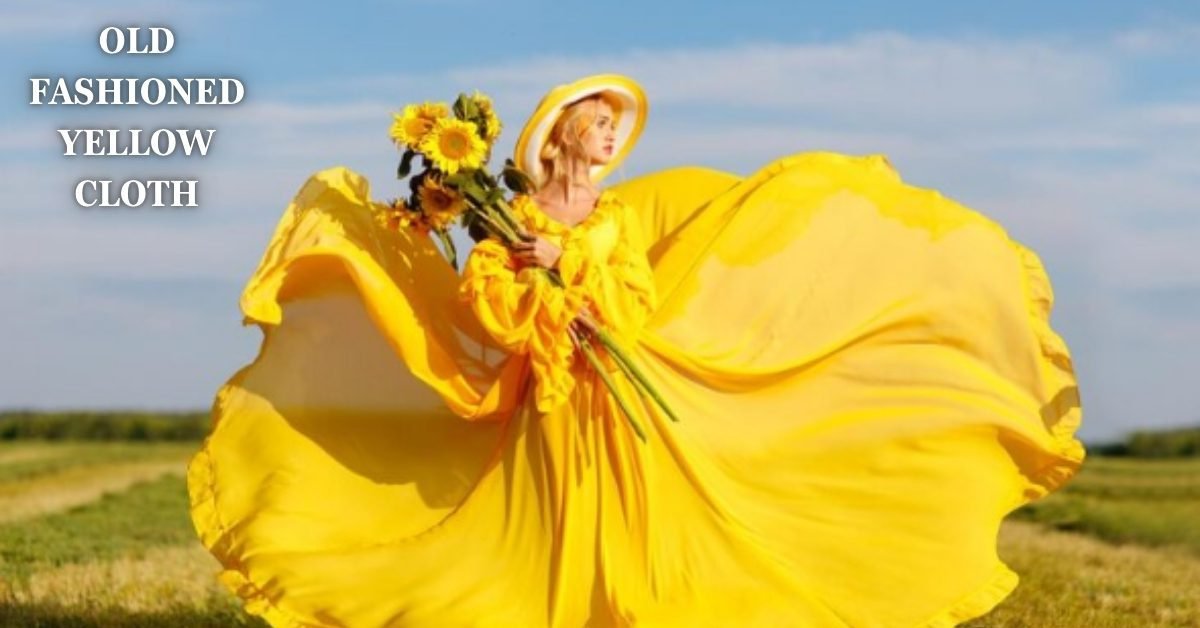
Old fashioned yellow cloth almost always points back to one of a few real textiles, nankeen cotton, mustard gingham, or a feedsack floral print, each with its own history and its own faded, warm cast of yellow. This is not the neon or lemon yellow you see on a modern rack, it’s a muted, slightly dusty tone that comes from natural dye and decades of sun and washing. By the end of this guide, you’ll know exactly which fabric people mean when they say this, where the color came from, and how to actually wear that shade in a way that reads intentional instead of costume-y.
Short Answer
Old fashioned yellow cloth usually refers to nankeen, a naturally yellow-toned cotton first woven in China, or to the mustard ginghams, calicos, and feedsack florals that carried a similar warm yellow through 19th and early 20th century clothing. Today the closest modern equivalents are mustard, ochre, and buttery gold fabrics.
What People Actually Mean by “Old Fashioned Yellow Cloth”
When someone searches this exact phrase, they’re rarely thinking of one single fabric. Three real textiles get lumped under this description, and knowing which one applies changes what you should actually look for. The first is nankeen, a plain-weave cotton that is naturally pale yellow to buff colored rather than dyed, originally woven around Nanjing, China, and later reproduced from ordinary cotton dyed to match. Nankeen is a kind of pale yellowish cloth originally made in Nanjing, China, from a yellow variety of cotton, though it was later manufactured from ordinary cotton that was dyed to achieve the same shade.
The second is mustard or gold gingham, the checked cotton that shows up constantly in antique and reproduction fabric listings. The third is the feedsack floral, a small yellow print on a light ground that was originally printed onto the cotton sacks used for flour and animal feed in the early 1900s, then repurposed into dresses and aprons once the sacks were empty. All three share the same visual DNA, a soft, slightly grayed yellow rather than a clean, saturated one, which is the real giveaway that a fabric belongs in this category rather than just being “yellow.”
Where the Color Actually Comes From
The dusty quality of old fashioned yellow isn’t accidental, it comes from how the color was originally achieved. Natural cotton itself can carry a pale yellow tint depending on the variety, which is why nankeen didn’t need dye at all in its earliest form. Later yellow textiles relied on plant-based dyes like weld or turmeric, both of which fade unevenly and mellow with each wash, producing exactly the aged, buttery cast that reads as “old fashioned” today.
Modern yellow fabric, by contrast, is usually a flat, consistent synthetic dye, which is why a mustard blouse from a fast fashion rack can look almost cartoonish next to a genuinely vintage piece. If you’re trying to recreate the look rather than source an actual antique fabric, the trick is choosing a yellow with some gray or brown mixed into it, ochre, mustard, buff, or old gold, instead of a pure, bright lemon.
The Fabrics That Carried This Yellow Through History
Beyond nankeen, a handful of specific fabric types kept this color alive in everyday wardrobes for well over a century. Gingham check remained one of the most consistent carriers, since checked weaves hide fading and wear better than solids, which is part of why so much surviving antique yellow cloth is gingham rather than a plain color. Calico prints did similar work, small floral or geometric motifs printed onto plain-weave cotton, cheap to produce and durable enough to survive decades of storage.
Feedsack florals deserve their own mention because they’re the most directly tied to everyday American dressmaking rather than to designer fashion. Companies printed patterned cotton onto flour and feed sacks specifically so households could reuse the fabric for clothing once the contents were used up, and yellow floral prints were among the most common colorways because the shade hid staining well. If you look at surviving pieces from the 1900s through the 1920s, this era’s silhouettes and fabric choices line up closely with the broader shift in women’s clothing that also produced the fuller, more structured shapes covered in our breakdown of 1930s silhouettes and fabrics, since both eras leaned on cotton prints as an affordable alternative to silk.
The Mistake People Keep Making With This Color
The most common mix-up is treating “old fashioned yellow” as interchangeable with any bright yellow fabric, then wondering why a modern lemon-yellow blouse doesn’t read as vintage at all. The confusion happens because most people think of yellow as one shade rather than a range, so any saturated yellow gets mentally filed under the same label. But the entire visual signature of old fashioned yellow cloth comes from its lack of saturation, the gray, brown, or green undertone that natural dye and decades of fading leave behind.
The correct understanding is that you’re not chasing a color so much as a finish. A mustard or ochre fabric with a slightly matte, worn surface will read as old fashioned yellow even in a completely modern silhouette, while a glossy, neon-adjacent yellow won’t read that way no matter how vintage the cut is. Fabric weight matters here too, since lightweight cotton lawn and cambric were common in original nankeen and calico pieces, so a heavier, stiffer modern fabric in the same color tends to look more costume than authentic.
How to Actually Wear Old Fashioned Yellow Cloth Today
Bringing this color into a real, wearable outfit works best when you treat it the way the original fabrics were used, as a print or a solid worked into everyday pieces rather than a statement gown. A mustard gingham shirt in a lightweight cotton, worn open over a plain white tank with straight leg jeans, echoes the original fabric’s casual, workaday role without looking like a costume. For something dressier, an ochre or buff colored midi skirt in a soft cotton poplin, paired with a fitted ivory or cream top, keeps the palette close to what antique yellow cloth would have sat next to originally, since these fabrics were almost always paired with unbleached whites and creams rather than stark black or bright color.
Price-wise, reproduction and vintage-inspired yellow cottons in this muted range typically run in a similar bracket to other mid-weight quilting and apparel cotton, so budgeting the same as you would for any good cotton poplin or lightweight flannel is a reasonable expectation, rather than assuming the vintage association pushes the price much higher. If you want to lean further into the era the fabric comes from, a small feedsack-style floral print in yellow works well as a blouse or a wrap skirt, since the scale of these prints was designed to be subtle rather than the oversized florals common in modern fabric.
Season, Occasion, and Body Type Notes
Old fashioned yellow reads warmest and most flattering in the transitional months, early autumn and mid spring, when its muted, slightly brown-tinged undertone sits naturally alongside the season’s other colors rather than fighting a bright summer palette. For cooler undertones, choosing a version with more gray than gold in the mix, closer to a dusty mustard than a true ochre, keeps the color from washing out the face. Warmer undertones can generally handle the fuller gold and buff end of the range without any adjustment.
On fit, this color works on nearly every body type, but the fabric weight matters more than the shade itself. A lightweight cotton in this yellow drapes and skims rather than adding bulk, which makes it a safer choice for fuller busts or midsections than a stiffer mustard fabric like a heavier twill, which can add visual volume exactly where a heavier hand isn’t needed. If you’re newer to wearing yellow at all, starting with a small dose, a scarf, a gingham detail, or a print rather than a full solid piece, is the easiest way to test how the shade sits against your own coloring before committing to a whole garment.
Conclusion
Old fashioned yellow cloth isn’t a single fabric, it’s a family of muted, naturally dyed textiles, nankeen, mustard gingham, and feedsack florals, that all share the same dusty, warm undertone. The most useful next step is to stop shopping for “yellow” and start shopping for “mustard,” “ochre,” or “buff” instead, since those search terms will actually surface fabric and finished pieces that match the real historical color rather than a bright modern imitation of it.
FAQ
Is old fashioned yellow cloth the same thing as nankeen?
Nankeen is one specific version of it, a naturally pale yellow cotton, but the broader phrase also covers mustard gingham and feedsack floral prints from later eras.
Why does antique yellow fabric look different from modern yellow fabric?
Antique yellow typically came from natural dyes like weld or turmeric that fade unevenly, which produces the muted, slightly gray or brown cast that flat modern synthetic dye doesn’t replicate.
What colors pair well with old fashioned yellow in an outfit?
Cream, ivory, and unbleached white sit closest to how this yellow was originally worn, since those were the natural companion shades to undyed and lightly dyed cotton.
Can this color work for someone with a cool skin undertone?
Yes, choosing a version with more gray or brown mixed into the yellow rather than a pure gold tone keeps it flattering on cooler coloring.
Is vintage yellow fabric hard to find compared to other antique colors?
It’s less common than antique blue or red because yellow dye faded and stained more visibly, so fewer well-preserved yellow pieces survived, which is part of why genuine antique examples carry a premium over reproductions.