
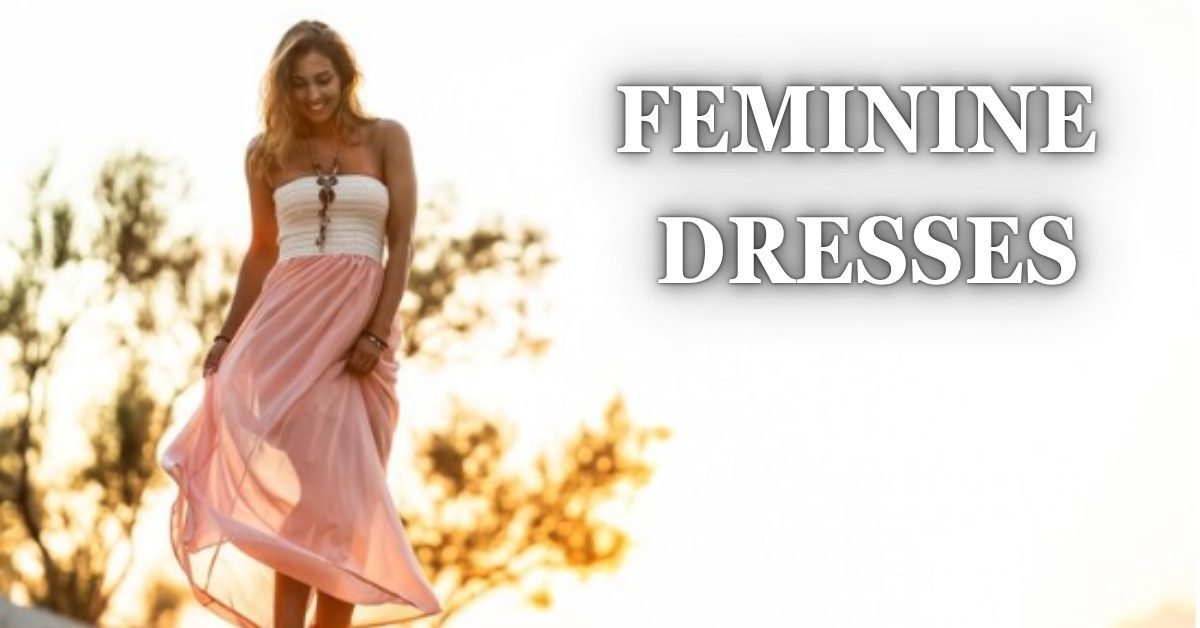
Feminine dresses depend more on fabric weight and how a dress moves than on the color you pick, and once you know what to look for, picking the right one gets a lot easier. This guide walks through the silhouettes, necklines, and fabrics that actually create that soft, put-together look, plus real outfit ideas for different occasions and seasons. By the end you will know how to judge a feminine dress off the rack instead of guessing from a product photo.
The Bottom Line Upfront
A feminine dress reads as soft and graceful because of two things working together, a lightweight fabric that drapes rather than holds its shape, and a silhouette that defines the waist. Color and prints matter far less than most guides suggest.
What Actually Makes a Dress Read as Feminine
Most shopping pages talk about feminine dresses as if the look comes from florals, pastels, or a bow at the neckline. Those details help, but they are not what does the real work. The heavy lifting comes from fabric weight, which is measured in grams per square meter or GSM, and it decides whether a dress moves with you or sits stiff against your body.
Fabrics under about 150 GSM, like chiffon, cotton lawn, and rayon challis, fold and fall in soft curves because there is little resistance to gravity. That soft movement is what reads as feminine even before anyone notices the color or the print. Heavier fabrics above 250 GSM, like ponte or structured cotton, hold their shape and create a sharper, more tailored look instead.
Waist definition is the second piece. A dress that nips in at the natural waist, even slightly, creates the hourglass proportion that most people associate with a feminine silhouette. Without it, even a soft fabric can end up reading as loose and shapeless rather than graceful.
Print scale plays a smaller but real role too. A tiny ditsy floral or a fine polka dot reads soft and feminine, while the exact same motif blown up to a large, bold scale on the same fabric can suddenly look graphic and modern instead. So it is not florals themselves doing the work, it is how small and dense the print sits against the fabric.
The Silhouettes Worth Knowing
Once fabric and waist definition are sorted, the cut of the dress decides which body it flatters and which occasions it suits. These five silhouettes cover almost everything worth owning.
- A-line: Narrow through the shoulders and bust, then widens gradually toward the hem. Works on nearly every body type and is the safest starting point if you are unsure what suits you.
- Fit-and-flare: A fitted bodice through the waist paired with a skirt that flares out from there. Creates a defined waist even on straighter body types and photographs well for events.
- Wrap: Overlaps at the front and ties at the waist, which means the fit adjusts to you rather than the other way around. The diagonal neckline this creates is one of the most consistently flattering shapes across body types.
- Empire waist: The seam sits just below the bust instead of at the natural waistline, then the skirt falls loosely from there. Especially good in soft, drapey fabric since it lengthens the body without needing a fitted waist.
- Slip or bias-cut: Cut on the diagonal grain of the fabric so it skims rather than clings. Needs a fabric with real drape, since a stiff fabric cut this way just looks awkward instead of fluid.
Necklines That Shape the Whole Look
The neckline decides how the dress frames your face and shoulders, and it changes the entire feel of an otherwise simple dress. A sweetheart neckline, shaped like the top of a heart across the bust, is one of the most common choices for feminine and occasion dresses because it softens the collarbone area without much exposure. Square necklines do something similar with sharper lines, and they tend to suit broader shoulders and hourglass figures particularly well.
Off-the-shoulder necklines sit just below the shoulder itself, drawing attention to the collarbone, and they read as flirty without needing a low front. A wrap-style V-neckline, the kind created by an overlapping bodice rather than a straight cut, tends to feel softer than a plunging V because the fabric drapes instead of forming a hard line. None of these require a particular body type to work. They mostly come down to which part of your upper body you want the eye drawn toward.
Fabrics and Price Tiers That Actually Deliver
Here is where most feminine dress guides stay vague, and it is worth being specific instead. Rayon challis sits around 100 to 130 GSM, drapes beautifully, and shows up in dresses from roughly $30 to $60. Cotton lawn runs a bit lighter, close to 80 to 100 GSM, and gives a crisp but still soft hand that works well for daytime dresses in a similar price range. For something with more shine and weight in the drape itself, a silk-blend crepe typically falls between 100 and 150 GSM and usually costs $80 to $150 depending on the silk content.
At the top end, silk charmeuse and true silk crepe de chine sit lighter still, often under 100 GSM, and that is part of why they cost $200 or more. The low weight is not a shortcut or a flaw, it is what makes the fabric drape the way it does. According to a fabric-buying guide from the sewing publication Seamwork, a fabric with good drape falls gracefully and clings easily to the body, which is exactly the quality that separates a feminine dress from a dress that merely happens to be shaped like one.
Knit fabrics complicate this a little, since a lightweight jersey around 140 GSM can drape just as softly as a woven fabric at the same weight, but it will also cling more closely to the body because of the stretch. If you want the soft movement of a feminine dress without the fit hugging every curve, a woven fabric in that same low GSM range is usually the safer pick over a knit.
The Feminine Dress Mistake Almost Everyone Makes
The most common mix-up is treating “feminine” as a synonym for pink, floral, or covered in ruffles. Plenty of feminine dresses are black, navy, or a deep jewel tone, and the softness still comes through because the fabric and cut are doing the actual work. A stiff pink dress in a heavy poly-blend will read more costume than feminine, while a black silk-blend slip dress with real drape reads soft and graceful without a single flower print in sight.
This confusion happens because color is the first thing anyone notices in a photo, so it gets credited for a look that fabric and cut actually created. Once you start judging a dress by how it moves when you walk rather than by its print, the whole category opens up. You stop ruling out dresses that would have worked perfectly well just because they were the wrong color on the hanger.
Building the Look by Occasion
A feminine dress for the office looks different from one for a wedding, even if the underlying principles stay the same. For work, a midi-length wrap dress in a medium-weight crepe, paired with low block heels and a structured bag, keeps the softness without losing polish. Add a blazer over it for meetings and remove it for a client lunch.
For a daytime event like a bridal shower or garden party, a fit-and-flare dress in a light floral cotton lawn works well with flat sandals or low wedges, and a woven straw bag finishes the look without trying too hard. If you already lean toward warm, saturated shades, a women’s red sundress built in a similar lightweight cotton can do the same job with a bolder color story.
Evening calls for more drapes and a bit more shine. A slip dress in silk-blend charmeuse, worn with strappy heels and minimal jewelry, lets the fabric do the talking instead of piling on accessories. For something a little more everyday, building a handful of go-to combinations around outfit ideas that never look try-hard makes it easier to repeat a feminine dress in different settings without it feeling like the same outfit twice.
Feminine Dresses Across Body Types
An hourglass figure can wear almost any of the five silhouettes above without much adjustment, since the goal is usually just to keep the waist visible. A rectangular body type benefits most from fit-and-flare or wrap styles, since both silhouettes manufacture waist definition that the body does not naturally provide. Pear shapes tend to do best in A-line or empire waist dresses, which skim over the hips rather than clinging to them.
Petite frames should watch fabric weight closely, since anything heavier than about 200 GSM can overwhelm a smaller frame and shorten the leg line. A lighter fabric in an empire or A-line cut, hemmed at or just above the knee, tends to lengthen the body instead of shortening it.
Keeping a Feminine Dress Looking That Way
Lightweight fabrics are exactly the ones that suffer most from rough washing, so the care routine matters almost as much as the initial purchase. Cold water on a gentle cycle, or a hand wash for anything silk-blend, keeps fibers like rayon and silk from breaking down the way hot water and high spin speeds tend to cause. Skip the dryer entirely for anything under 150 GSM, since heat is what turns a soft drape into a stiff, shrunken version of itself within a few washes.
Hanging a feminine dress on a padded hanger, rather than a wire one, also protects the shoulder seams on lighter fabrics that stretch out of shape more easily than heavier ones. It is a small habit, but it is the difference between a dress that still drapes well after a year and one that starts looking tired after a few wears.
Conclusion
The fastest way to shop for feminine dresses is to stop starting with color. Check the fabric weight if it is listed, or the fabric content if it is not, and picture how it would move if you lifted the hem and let it drop. Pair that with a silhouette that defines your waist, whether that is a wrap, a fit-and-flare, or an A-line, and you will end up with dresses that work across more occasions than a closet full of florals ever could.
FAQ
Is a feminine dress the same as a girly dress?
Not quite. Girly usually implies specific details like bows, pastels, or ruffles, while feminine is broader and can include tailored, minimal, or dark-colored dresses as long as the fabric drapes and the waist is defined.
Can a feminine dress work for the office?
Yes, as long as the length and neckline stay conservative. A midi wrap dress or a fit-and-flare in a medium-weight fabric reads polished rather than casual.
What fabric feels most feminine against the skin?
Cotton lawn and rayon challis are the most comfortable lightweight options for everyday wear, while silk-blend crepe and charmeuse suit evening pieces where a bit more shine is welcome.
Do feminine dresses have to be fitted at the waist?
No, but some form of waist definition, even a soft tie or a gathered seam, keeps a loose dress from reading as shapeless rather than relaxed.
Are feminine dresses only for certain body types?
No, The silhouette just needs to match what you want to emphasize, and every body type has at least two or three cuts from this guide that will work well.