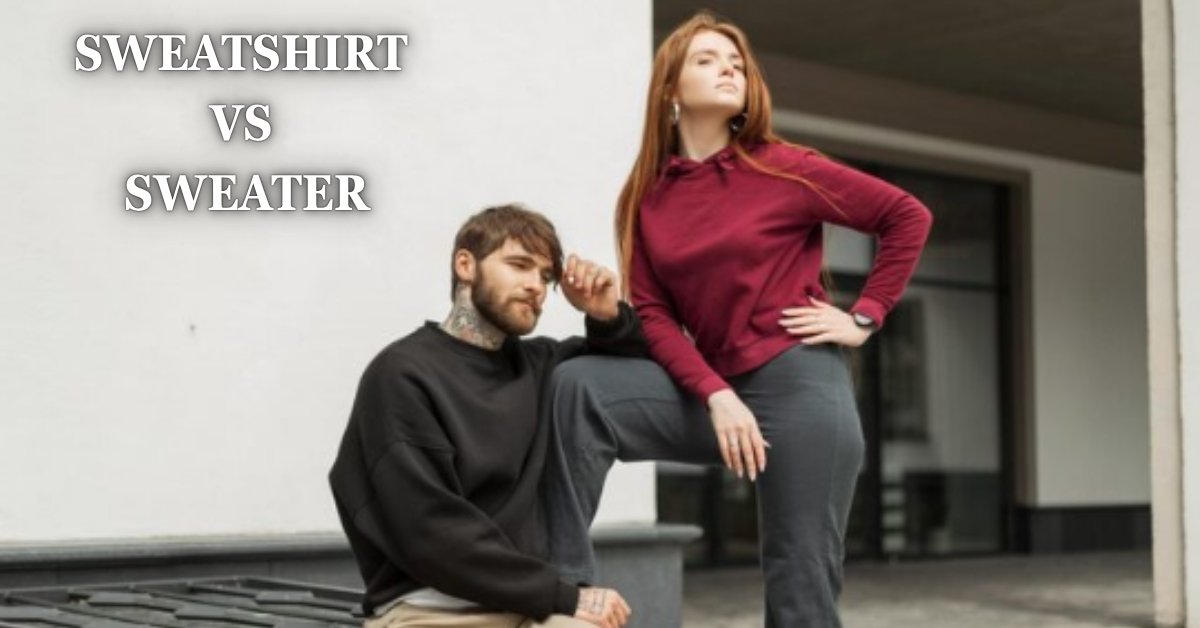
Sweatshirt vs sweater arguments usually chase the wrong question. Most people assume the split comes down to warmth, but the real divide is how each garment gets made: a sweater is knitted from yarn, while a sweatshirt is cut and sewn from fleece-backed fabric. That construction difference decides almost everything else, including how bulky each one feels under a coat, how dressy it can go, and how it holds up after fifty washes. This guide breaks down the materials, the formality gap, real price tiers, and the layering mistake that quietly ruins a good coat. By the end, you’ll know exactly which one to reach for and why.
The Bottom Line Upfront
A sweater is knitted from yarn, usually wool, cotton, or cashmere, which is why it drapes and layers well under jackets or blazers. A sweatshirt is cut and sewn from fleece-backed cotton or polyester, built for comfort rather than polish. Pick a sweater when fit and versatility matter, a sweatshirt when ease and low maintenance do.
Knitted or Sewn: The Difference That Actually Matters
A sweater starts as a single continuous strand of yarn, looped and interlocked by a knitting machine or by hand into rows that stretch, recover, and shape themselves around the body. That looped structure is why a sweater can hug a shoulder without puckering and why it can be reknit tighter or looser to create ribbing at the cuffs.
A sweatshirt starts differently. Manufacturers knit or weave a flat length of fleece-backed fabric first, then cut pattern pieces from it the same way a t-shirt gets cut, and sew those pieces together at the seams. There’s no shaping built into the fabric itself, so a sweatshirt relies on the pattern and the seams to create fit rather than the fiber’s natural stretch. Gauge is the word that separates the two industries: sweaters are measured by how many stitches per inch, while sweatshirt fabric is measured by weight per square meter, and neither number means much to the other side.
What Each One Is Actually Made From
Fiber content drives most of the price and performance gap between these two garments. Here’s what shows up on the label most often:
- Sweaters: wool, merino wool, cashmere, cotton, acrylic, or blends of these, knitted at gauges ranging from chunky 5-gauge (thick, sweater-weather heavy) to fine 14-gauge (thin enough to wear under a blazer)
- Sweatshirts: cotton fleece, cotton-polyester blends, or French terry, typically running 280 to 400 grams per square meter with a brushed or looped interior for warmth
Wool and cashmere both come from animal fiber with a natural crimp that traps air between the strands, which is part of why a fine-gauge wool sweater can feel warmer than its thickness suggests. Cotton fleece traps warmth differently, through the loft of the brushed interior rather than the fiber itself, so a heavier fleece almost always means more actual fabric between you and the cold.
The Layering Bulk Nobody Mentions
Warmth on its own is a poor way to compare these two, because the number that actually predicts how each one behaves under a coat is bulk, not insulation. A 12-gauge lambs wool crew sweater runs close to 280 grams per square meter, similar to a mid-weight fleece sweatshirt on paper, but the knit compresses under pressure. Slide it under a wool coat and the sleeve barely thickens at the shoulder seam.
A cut-and-sewn sweatshirt doesn’t compress the same way. Its seams are fixed, its fabric doesn’t give, and a 350 GSM crewneck under a tailored coat will visibly round out the shoulder and strain the coat’s sleeve. This is the detail most comparisons skip entirely, and it’s the reason a sweater is the better base layer for anything worn under structured outerwear, even when the sweatshirt technically feels just as warm standing alone in a store.
Thin base layers make this gap even more obvious. A silk cami under a fine-gauge wool sweater adds real warmth without adding bulk, the same principle covered in more depth in this breakdown of how silk’s momme weight affects drape and layering. There’s no equivalent trick for a sweatshirt, since its fleece backing already occupies the space a base layer would need.
The Sweatshirt vs Sweater Assumption That Backfires in Cold Weather
People default to sweatshirts for the coldest days, assuming thicker automatically means warmer, and that assumption backfires more often than it should. A single heavy sweatshirt traps warm air in one thick layer, but once that layer is saturated with body heat, there’s nowhere for it to go, and the smooth outer fabric doesn’t hold a second layer well on top.
Wool sweaters work differently because of how the fiber itself behaves. Each strand has a natural crimp that creates thousands of tiny air pockets, so even a lighter-gauge wool sweater insulates efficiently while still leaving room to layer a shirt underneath and a coat on top. Three thinner layers built around a wool sweater usually outperform one thick sweatshirt in genuinely cold weather, which is the opposite of what the fabric’s visual bulk suggests.
Which One Reads Dressier for the Occasion
Formality is where the two garments split hardest. A merino crew or a cashmere V-neck reads as intentional the moment it goes on, structured enough to sit under a blazer for the office or stand alone at dinner with dark trousers. A sweatshirt reads as leisurewear no matter how clean the cut is, since the fleece texture and boxy seaming signal comfort over polish at a glance.
That doesn’t make sweatshirts wrong for semi-dressed-up settings. A fitted, unbranded crewneck sweatshirt in a heavier French terry can work for a casual Friday or weekend brunch when paired with tailored trousers instead of joggers, but it’s doing the work of dressing itself up rather than starting dressy. The same fit logic that decides whether a blouse looks tailored or sloppy, covered in this guide to testing a blouse’s fit at the shoulder, applies just as much to how a sweater sits across the shoulders before it goes under a jacket.
Real Price Tiers and What Changes at Each One
Price tracks fiber and construction more predictably here than in most clothing categories:
- $25 to $45: cotton-poly sweatshirts, standard fleece weight, machine-made cut-and-sew construction
- $45 to $70: midweight acrylic or cotton-blend sweaters, decent shape but shorter lifespan on the elbows
- $70 to $120: lambswool or merino crews, finer gauge, better shape retention over years of wear
- $150 and up: cashmere or cashmere-blend sweaters, softest hand feel, but the most fragile against friction and pilling
A $200 sweatshirt exists, usually from a streetwear label paying for branding rather than fabric weight, but it won’t outperform a $50 sweatshirt in warmth or durability. Sweaters are the rare category where price genuinely tracks fiber quality more often than it tracks marketing.
Washing and Care: Where the Two Actually Diverge
Sweatshirts are forgiving. Cotton-poly fleece goes in a normal machine wash, tumbles dry fine on low heat, and rarely needs anything beyond the standard cycle unless it’s printed or embroidered.
Sweaters ask for more attention, and skipping that step is the fastest way to ruin an expensive one. Wool and cashmere should generally be hand washed or run on a cold, gentle cycle in a mesh bag, then dried flat rather than hung, since a wet knit stretches under its own weight on a hanger. The Woolmark Company’s official wool washing guidance recommends checking the garment’s care label first, since some machine-washable wool can tolerate a gentle cycle while other pieces genuinely need hand washing regardless of fiber quality. Skip this step on a cashmere sweater and it will pill and lose shape within a season, while the same neglect barely touches a cotton sweatshirt.
Picking Between Them for Real Situations
- Office under a blazer: a fine-gauge merino or cotton-blend crew, thin enough not to bunch at the sleeve
- Weekend errands or travel days: a cotton-poly sweatshirt, easy to wash and forgiving of spills
- Layering under a winter coat: a lightweight wool sweater over a thin base layer, never a bulky sweatshirt
- Loungewear or a workout warmup: a sweatshirt, since sweat and machine washing matter more than drape
- Dressy casual dinner: a fine-gauge sweater in cashmere or merino, paired with tailored trousers rather than denim
Conclusion
Sweatshirt vs sweater isn’t really a warmth contest, it’s a construction and context decision. Reach for a sweater when fit, formality, or layering under a coat matters, and reach for a sweatshirt when ease of care and casual comfort matter more than polish. Check the gauge or GSM on the label next time you’re deciding, since that single number predicts bulk and behavior better than the price tag does.
FAQ
Is a hoodie a sweatshirt or a sweater?
A hoodie is a type of sweatshirt, cut and sewn from the same fleece-backed fabric with a hood and drawstring added, not a knitted garment like a sweater.
Can you wear a sweatshirt to work?
Only in genuinely casual offices, and even then a fitted, unbranded crewneck in heavier French terry paired with tailored pants reads far more professional than a graphic or oversized style.
Which is warmer, a sweater or a sweatshirt?
It depends on gauge and fiber more than thickness, since a fine wool sweater’s crimped fibers can insulate as well as a bulkier fleece sweatshirt while adding far less bulk.
Do sweaters shrink more than sweatshirts?
Wool and cashmere sweaters shrink more easily in warm water or high heat than cotton-poly sweatshirts, which is why label instructions matter more for knitwear than for fleece.
What’s the difference between a sweater and a jumper?
Nothing functionally, jumper is simply the British English term for the same knitted garment Americans call a sweater.