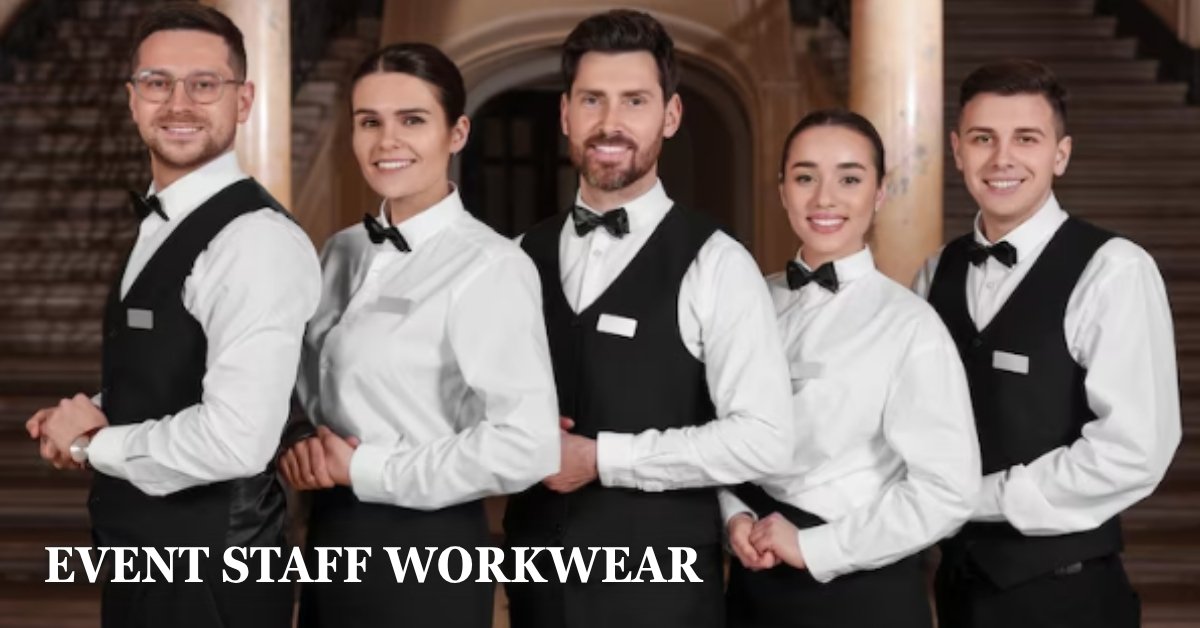
Event staff workwear gets picked for one photo and then has to survive an eight-hour shift, which is exactly where most advice on the topic falls apart. Almost everything written on this keyword is aimed at the planner choosing uniforms for a team, not at the person actually wearing them across a dozen different gigs a season. This guide flips that. You’ll get real pieces worth owning, the fabrics and shoes that hold up on concrete floors and grass fields, and how to adjust the same core wardrobe for a black-tie gala, a festival activation, or a trade show floor.
Short Answer
Event staff workwear works best as a small rotation of black and white basics, stretch-blend pants, a moisture-wicking shirt, and slip-resistant closed-toe shoes, all chosen for eight hours of standing and quick outfit swaps between gigs, not for any single event’s dress code.
Why Event Staff Workwear Follows Different Rules
Office workwear gets judged by how it photographs in a Zoom window. Event staff workwear gets judged by how it holds up after five hours of setup, three hours on your feet greeting guests, and a rushed strike at midnight. That changes almost every fabric and fit decision.
A blazer that wrinkles after twenty minutes sitting at a desk is a minor annoyance. The same blazer worn while hauling folding chairs is a real problem, because natural fibers that need pressing don’t recover between calls. Gig workers who staff three or four events a month need pieces that go from steamer to bag to venue floor without falling apart, and that’s a fabric-science question as much as a style one.
The Core Pieces Worth Owning
Most dress codes for event staff, hospitality crews, brand ambassadors, and promo teams land in the same narrow band: black or white, closed-toe, no logos unless provided. Building a small rotation around that band means one shopping trip covers most gigs for a full season instead of buying new pieces for every booking.
- Black stretch-twill trousers ($35 to $55): a poly-cotton blend with 3 to 5 percent spandex holds a crease through a full shift and doesn’t bag at the knee the way plain cotton chinos do after two hours of standing.
- White stretch-cotton dress shirt ($30 to $45): look for a wrinkle-resistant finish and a slightly roomier cut through the shoulders, since most shifts involve carrying trays or lifting signage.
- Black moisture-wicking polo ($20 to $30): the default for daytime or outdoor activations where a full dress shirt reads too formal.
- Lightweight black bomber or blazer-hybrid jacket ($45 to $70): enough structure to look put together, thin enough to layer without overheating indoors.
- A compact black cross body or fanny pack ($20 to $35): for a phone, badge, and cash without a bag swinging while you work a floor.
None of these need to be expensive. What matters is the blend, since a shirt that’s 100 percent cotton will show sweat rings by hour three in a way a poly-cotton blend simply won’t.
Shoes That Actually Survive an Eight Hour Shift
Footwear is where most event staff workwear advice goes vague, and it’s the one category where vague advice actually costs you. Standing shifts on concrete, tile, or wet outdoor grass call for a slip-resistant rubber outsole, not just a black sneaker that happens to look formal enough. Slip resistant soled shoes should be worn when working on slippery surfaces, and that guidance applies just as much to a caterer’s kitchen or a rained-on festival field as it does to a shipyard, per federal workplace safety guidance on foot protection. Occupational Safety and Health Administration
In practice that means a closed-toe black leather or synthetic shoe with a rubber, oil-resistant sole, in a low block heel or flat depending on the dress code. Brands built for restaurant and hospitality shifts tend to outperform fashion sneakers here, because they’re tested for grease and wet-floor traction specifically, not just cushioning. Budget $50 to $80 for a genuinely slip-rated pair and expect it to last two full seasons of regular gigs.
The Event Staff Workwear Mistake That Ends Most Shifts Early
The mistake almost every first-time event worker makes is buying for how the outfit looks in the mirror at home, not for how it performs after five hours of movement. A crisp white shirt looks great at 4 p.m. and shows every sweat mark and coffee splash by 9 p.m., especially if it’s pure cotton with no wicking finish.
The confusion happens because most people shop for event workwear the same way they’d shop for a job interview outfit, focused on the first impression rather than the full shift. But an event booking isn’t a thirty-minute meeting, it’s often eight hours of standing, carrying, and repeated guest interaction in changing temperatures. The fix is simple once you see it: prioritize fabric performance over how sharp something looks on a hanger, and let the styling details, a good belt, a clean shirt tuck, come from fit rather than fabric weight.
Dressing for Different Event Types
The same core rotation flexes for almost every booking type, but the ratio of pieces shifts depending on the venue and season.
For an indoor corporate activation or trade show, lean on the white stretch-cotton shirt and black trousers, since you’re mostly standing and talking rather than lifting. A structured shoe with a slight heel reads more polished under trade show lighting.
For an outdoor festival or brand ambassador shift, swap the dress shirt for the moisture-wicking polo and prioritize breathable socks and sun coverage. Grass and gravel wear down thin-soled shoes fast, so a slightly heavier tread pays off here.
For a gala or formal catering shift, the white shirt gets buttoned all the way up, sleeves stay long and structured rather than rolled, and the bomber jacket gets swapped for the blazer-hybrid piece. A fitted white blouse that actually holds its shape through a full shift matters more here than almost anywhere else, since formal front-of-house roles are judged on a clean silhouette from every angle, not just the front.
Building a Rotation on a Real Budget
A full working rotation, two pairs of trousers, two shirts, one polo, one jacket, and one pair of slip-resistant shoes, lands somewhere between $220 and $340 bought at mid-range retailers. That covers roughly a dozen gigs before anything needs replacing, assuming you rotate pieces rather than wearing the same shirt two shifts in a row.
Spending more makes sense in exactly one place: shoes. A cheap pair with a flat rubber sole and no real tread will need replacing after a single festival season, while a genuinely slip-rated pair holds up for two or three. Everywhere else, the poly-cotton blend basics from a mid-tier retailer perform close to identically to pricier versions, since the fabric technology doing the actual work is the same. If you’re still figuring out which silhouettes suit your build before committing to a full rotation, a broader look at everyday outfit combinations built around pieces you already own is a useful place to start before you buy anything new.
Conclusion
Event staff workwear only works if it survives the actual shift, not just the first hour of it. Build a small rotation around stretch-blend basics in black and white, spend the real money on slip-resistant shoes, and adjust the ratio of pieces based on whether you’re indoors, outdoors, or working a formal room. Start with two shirts, one pair of trousers, and one solid pair of shoes, then expand the rotation as you take on more bookings.
FAQ
Do event staff have to buy their own uniforms?
It depends on the staffing agency or venue, some provide branded pieces like polos or vests while expecting workers to supply their own black trousers and shoes.
What shoes are best for standing all day at an event?
A closed-toe shoe with a slip-resistant rubber outsole, tested for wet or greasy floors, holds up best across a full shift on concrete or tile.
Can you wear sneakers for event staff work?
Plain black sneakers are often acceptable for casual or outdoor activations, but formal galas and corporate events usually require a dressier closed shoe with a low heel or flat sole.
How many outfits do I need for regular event staffing gigs?
Two to three interchangeable tops and two bottoms in black and white generally cover most dress codes, since the pieces get mixed and matched rather than worn as fixed outfits.
What fabric holds up best for long event shifts?
A poly-cotton or poly-spandex blend resists wrinkles and sweat marks far better than pure cotton, which tends to look worn out by the second half of a shift.