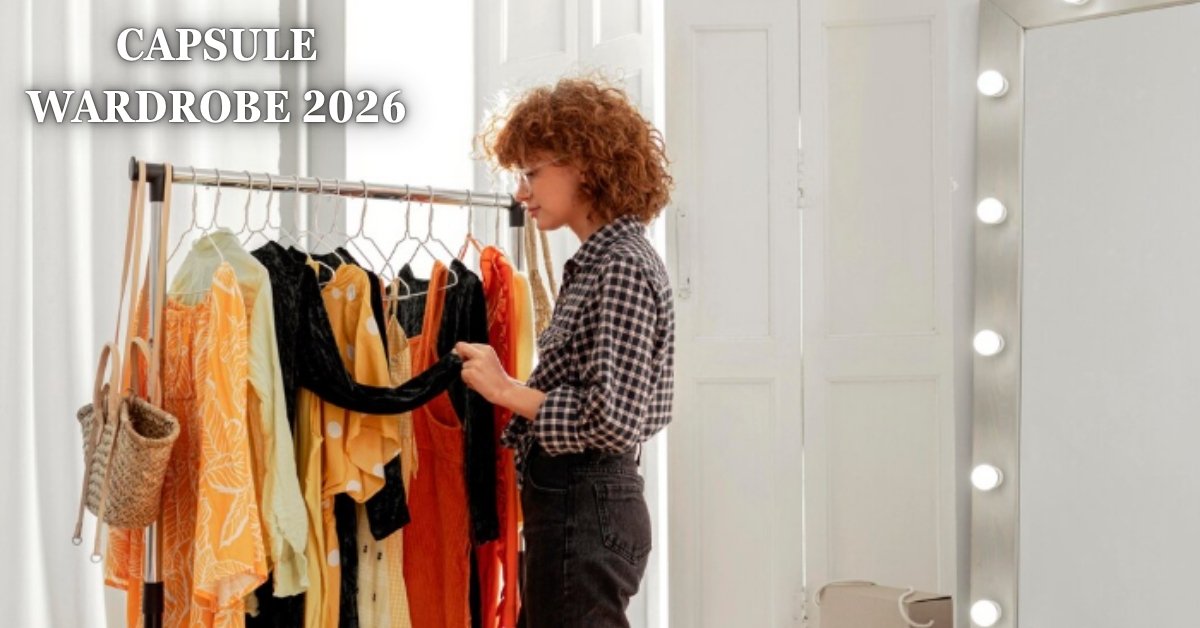
A capsule wardrobe still means fewer, better pieces, but the version that works this year skips the all-neutral formula that dominated the last few seasons. The real shift is one deliberately un-neutral piece added on purpose, and that single change is what separates a genuine capsule wardrobe 2026 plan from a recycled neutral list. This guide covers what belongs in that closet, how many pieces the math actually supports, and where the budget goes first, starting from zero or working from a closet that already has good pieces sitting in it.
You’ll also see the one mistake even good capsule guides keep making this year, along with real price ranges and a cost breakdown that shows why cheaper isn’t always cheaper. By the end, you’ll know exactly what to buy, what to skip, and how to build it in stages instead of one expensive weekend.
The Bottom Line Upfront
A 2026 capsule wardrobe works best with 24 to 32 well-chosen pieces built on four or five neutrals plus one deliberately non-neutral piece, like a colored coat or a textured knit. Prioritize a blazer, quality denim, and one investment shoe first, then add personality through that single exception piece.
The Real Shift Behind Capsule Wardrobe 2026 Planning
Fashion’s quiet luxury moment spent two straight years pushing every capsule wardrobe toward the same six neutrals: black, white, camel, navy, gray, and maybe olive. That formula worked, but it also produced a lot of closets that looked identical to each other. Trend coverage heading into fall 2026 has pointed toward something different, wardrobes built on stronger identity, with clean tailoring treated as a starting point rather than the whole story. The real takeaway for a 2026 capsule isn’t to abandon the neutral base. It’s to stop treating “no color, no pattern” as a rule and start treating it as a default you’re allowed to break once, on purpose.
The idea itself isn’t new. London boutique owner Susie Faux coined the term in the 1970s, and Donna Karan’s 1985 Seven Easy Pieces collection is usually credited with popularizing it in the United States, according to the concept’s documented history. What’s changed by 2026 isn’t the core idea. It’s how strictly the neutral part gets enforced, and how much room gets left for one piece that doesn’t play by the same rule.
That one exception piece does real work. A camel coat with a colored lining, a burgundy knit instead of another gray one, or a printed silk scarf against an otherwise neutral outfit signals that the wardrobe was chosen rather than defaulted into. Keep the exception to one category at a time, a coat or a knit or an accessory, never all three at once, or the capsule stops functioning as a capsule and starts functioning as a costume.
What Belongs in a 2026 Capsule Wardrobe
A working 2026 capsule sits on five categories: tops, bottoms, one structured outer piece, shoes, and the single exception piece described above. Everything inside those first four categories should coordinate with almost everything else, which is what actually produces outfit variety instead of a pile of separate outfits that happen to share a closet.
Here’s what the core actually looks like broken down by category:
- Tops: two crew or v-neck tees in white and a warm neutral, one crisp white or ecru button-down, one fine-gauge merino or cashmere-blend knit
- Bottoms: one dark straight or wide-leg jean, one pair of tailored wool-blend trousers, one midi skirt in a fluid fabric like crepe or matte satin
- Structured outer piece: one wool or wool-blend coat, or one soft-shoulder blazer if you already own a coat that still earns its keep
- Shoes: one loafer or low block heel, one clean leather sneaker, one ankle boot
- The exception piece: one item in a real color or pattern, chosen last, after the neutral base is already set
Fabric quality matters more here than anywhere else in the wardrobe, since these are the pieces worn two or three times a week. A midweight cotton around 180 to 220 GSM holds its shape through repeated washing, while a cashmere-blend knit with at least 30 percent cashmere resists pilling far better than the fully synthetic versions crowding fast fashion racks.
Matching Neutrals to Your Undertone
Not every neutral flatters every skin tone, which is a detail most 2026 capsule lists skip entirely. Warmer undertones usually read better in camel, cream, chocolate brown, and olive, since these colors echo the same warmth already present in the skin. Cooler undertones tend toward charcoal, true navy, white, and soft gray, which sit closer to the same cool base without fighting it.
A simple check settles most of the guesswork. Hold a piece of pure white fabric and a piece of ivory or cream fabric near your face in daylight. Whichever one makes your skin look brighter and less tired is the version worth building the white pieces around, rather than defaulting to whatever happened to be on sale.
How Many Pieces the Math Actually Supports
Most 2026 capsule guides land somewhere between 20 and 40 pieces, and that range is wide enough to be almost useless on its own. A tighter, more honest number sits closer to 24 to 32 pieces including shoes, enough to cover a normal week without repeating an identical outfit twice.
Run the actual combination math and the marketing claims of “200 outfits” start to fall apart. Twenty four pieces split across tops, bottoms, and layers can technically combine into far more than 200 pairings, but most of those pairings don’t hold up once color, formality, and season get factored in. A realistic capsule built this way produces closer to 60 to 70 outfits a person would genuinely wear, which still beats what a cluttered 60-plus piece closet manages in daily practice.
Two named systems show up across 2026 capsule content, and either one works as a starting frame. The 5-4-3-2-1 method, five tops, four bottoms, three layers, two pairs of shoes, one coat, tends to suit someone building a single year-round capsule. The 3-3-3 rule, three tops, three bottoms, three shoes per season, works better for anyone who swaps pieces seasonally, since it forces a hard reset every few months instead of letting the closet quietly grow.
Building It Around Your Budget and Your Actual Life
Price tier matters less than where the money goes. Spend more on pieces worn two or three times a week, coats, trousers, and shoes, and spend less on anything worn occasionally. A wool-blend coat in the 250 to 400 dollar range will usually outlast three cheaper versions bought over the same number of winters, which makes it a better value even though the sticker price looks worse upfront.
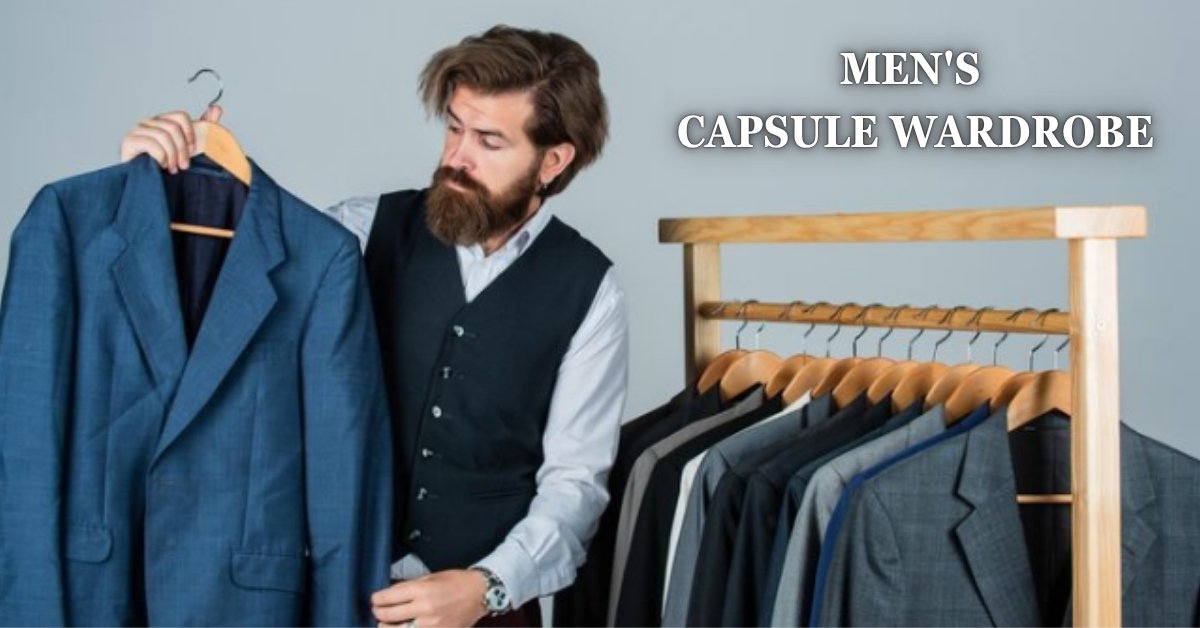
A realistic build spreads the 24 to 32 pieces over two or three shopping seasons rather than one expensive weekend. Start with the piece worn most often, usually the jeans or the coat, then fill in tops and shoes as gaps actually show up instead of guessing at what might get worn. This mirrors the same audit-first approach that works for building a men’s capsule wardrobe, just adjusted for different silhouettes and fabric choices.
Occasion changes the ratio more than most guides admit. Someone working from home most days can drop one blazer and add a second knit instead, since video calls rarely require structure below the collarbone. Someone in client-facing or office roles should keep at least one blazer and two button-downs in steady rotation, since those pieces get worn weekly rather than saved for occasions that rarely come up.
Proportion changes how the same capsule reads on different bodies, too. A cropped blazer or a higher-rise trouser tends to balance a shorter torso, while a longer, unstructured coat and a mid-rise pant usually suit a longer torso better, since matching break points to natural proportions does more visual work than the specific cut or brand ever will.
The same core capsule should also work as a travel capsule without a single dedicated vacation outfit. Packing five days from a 24-piece closet mostly comes down to choosing three tops, two bottoms, and one pair of shoes that already coordinate at home, then repeating combinations instead of packing a separate wardrobe for the trip.
Accessories round out the exception piece without adding real bulk. A patterned scarf, a colored bag, or one pair of statement earrings does the same job as buying an entire non-neutral outfit, at a fraction of the cost and the closet space. A short list of accessories actually worth the money is worth checking before buying anything new here.
The 2026 Capsule Mistake That’s Easy to Miss
The most common mistake in 2026 capsule planning isn’t buying too much. It’s assuming the neutral rule applies to every single piece, all the time, with zero exceptions. That assumption comes from years of capsule content that treated color and print as the enemy of a functional wardrobe, which made sense back when the goal was maximum interchangeability at any cost.
The confusion happens because a fully neutral capsule really is the easiest version to photograph and sell as content, since every piece pairs with every other piece by default. But a wardrobe with zero personality pieces starts to feel like a uniform rather than a closet, and that’s exactly the fatigue pushing fashion coverage back toward stronger identity this year. The fix isn’t complicated. Build the neutral base first, confirm it actually works together, then add the one piece that breaks it on purpose.
Keeping the Pieces Working All Year
A capsule wardrobe only pays off if the pieces survive real, repeated wear. Wash cashmere-blend knits by hand or on a cold wool cycle, then lay them flat to dry, since heat and agitation cause pilling and shrinkage far more often than simple age does. Store wool coats on wide, shaped hangers instead of wire ones, which keeps the shoulder seams from stretching out of shape over a single season.
Rotate shoes rather than wearing the same pair daily, since leather needs at least a day to fully dry out and reshape between wears. A five dollar pair of cedar shoe trees does more for a $150 leather shoe’s lifespan than almost any other single purchase on this list, and it’s the kind of detail most 2026 capsule guides skip entirely in favor of another shopping list.
Conclusion
The fastest way to build a capsule wardrobe 2026 actually reflects is to set the neutral base first, from pieces already proven to work, then add exactly one piece that breaks the palette on purpose. Spend the real money on what gets worn weekly, the coat, the trousers, the shoes, and let cheaper pieces fill in around them. Build it over two or three seasons instead of one weekend, and the wardrobe keeps working long after this year’s specific trend colors have moved on.
FAQ
Is quiet luxury still the right base for a 2026 capsule wardrobe?
Yes, as a foundation. Quiet luxury’s neutral, well-tailored basics still form the core of a working capsule, but fashion coverage this year is pushing toward one identity piece layered on top rather than an entirely neutral closet.
What’s the real difference between a capsule wardrobe and just owning fewer clothes?
Owning less is simple subtraction, while a capsule wardrobe is deliberate about how each piece pairs with the others. A small closet full of items that don’t coordinate still produces fewer usable outfits than a properly built capsule half its size.
How much should a 2026 capsule wardrobe cost to build?
Spread over two or three shopping seasons, a full capsule typically runs somewhere between 800 and 2,000 dollars depending on how many pieces are already owned and reused. Building it gradually, prioritizing cost-per-wear on the core pieces, keeps the total lower than replacing an entire closet at once.
Can a capsule wardrobe still work if you genuinely love trends?
Yes, as long as trend pieces stay confined to the one exception slot instead of replacing the neutral base. Swapping that single piece each season lets trends move through the wardrobe without ever leaving a real gap.
How often should a capsule wardrobe get refreshed?
Most of the neutral base should last two to four years if the fabric quality holds up. The single exception piece is the one item worth swapping every season or two to keep the wardrobe feeling current.