
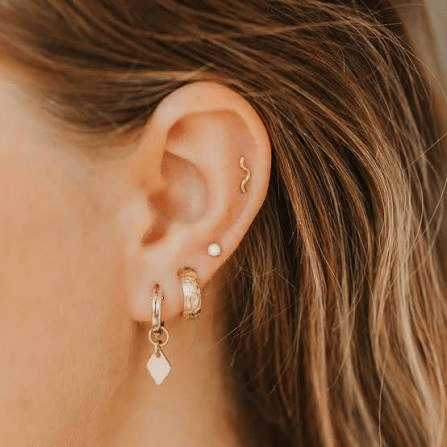
Best Gold-Tone Earrings for Sensitive Ears: Materials Explained
Affiliate disclosure: This article may contain affiliate links. If you purchase through qualifying links, WearAndRepeat may earn a commission at no additional cost to you. Always verify the current product specifications, metal composition, and return policy before purchasing.
Gold tone earrings for sensitive ears can add a polished finish to everyday outfits without requiring a solid-gold budget. However, the gold color alone does not tell you whether a pair is suitable for sensitive ears. An earring may have a gold-colored coating over titanium, sterling silver, stainless steel, brass, or an unspecified metal alloy—and these materials can behave very differently against your skin.
The most important details are the metal used for the post or hook, the underlying base metal, the type of gold finish, and whether the seller clearly discloses nickel content. A beautiful pair of gold-tone hoops may look identical to another pair while having a very different construction.
In this guide, we compare common earring materials, explain the differences between gold-plated, gold-filled, gold vermeil, and solid-gold jewelry, and explore everyday styles worth considering. You will also learn what to look for in product descriptions, how to care for your earrings, and how to choose a pair that suits your budget and personal style.
Quick Comparison: Gold-Tone Earrings for Sensitive Ears
| Earring material or finish | What it means | What to check | Best for |
|---|---|---|---|
| Gold-tone titanium | Titanium provides the base or post, with a gold-colored finish where specified | Confirm the titanium grade and material of the entire earring | Shoppers prioritizing documented titanium |
| Gold vermeil | Gold coating over sterling silver that meets the applicable vermeil requirements | Confirm the sterling-silver base and construction of the post | A gold look over a precious-metal base |
| Gold-filled | A mechanically bonded layer of gold over a base metal | Confirm the product is genuinely gold-filled and check the post material | Shoppers seeking a more substantial gold layer than ordinary plating |
| Gold-plated stainless steel | A thin gold coating over stainless steel | Ask for the steel grade and nickel information | Everyday styles at a potentially lower price |
| Gold-plated brass | Gold coating over a brass base | Check the post, plating, and nickel disclosure | Fashion jewelry, with extra caution for sensitive ears |
| Solid 14K or 18K yellow gold | Gold alloy throughout the piece rather than a surface coating | Verify the karat and whether the alloy is nickel-free | Long-term wear and premium jewelry |
| Unspecified gold-tone alloy | Gold-colored finish over an unclear metal composition | Ask the seller to identify the base and post material | Best avoided when metal sensitivity is a concern |
Important: No finish or marketing label guarantees that every part of an earring will suit every person. The post, back, solder, decorative body, and coating may use different materials. If you have a known metal allergy, prioritize complete material disclosure rather than relying on the color or the word “hypoallergenic.”
What Does Gold Tone Mean in Earrings?
“Gold tone” generally describes the color or appearance of an item. It does not automatically mean that the jewelry contains real gold.
A gold-tone earring may be made from titanium, stainless steel, brass, sterling silver, or another base material. Some pieces have a gold coating, while others use a gold-colored finish without a meaningful layer of gold.
This distinction matters when shopping for sensitive ears because the material touching your piercing can be more important than the visible front of the earring.
Gold Tone vs. Gold Plated
Gold-tone jewelry is a broad description of appearance. Gold-plated jewelry has a layer of gold applied over another material, although the exact thickness and construction can vary.
A listing that says “gold tone” may not explain whether the finish contains gold at all. A listing that says “gold plated” still does not tell you what metal is underneath.
Before purchasing, look for three details:
- The base metal used in the earring body.
- The material of the post or hook that passes through the piercing.
- The type of finish and any available nickel-disclosure information.
If a retailer only identifies the color and leaves the materials unspecified, contact the seller before buying.
Which Earring Materials Are Best for Sensitive Ears?
There is no single material that works for everyone. However, some materials offer clearer composition information and are useful starting points when you want to reduce exposure to metals that may trigger a reaction.
1. Titanium: A Strong Option to Investigate
Titanium is widely used in jewelry designed for people who are sensitive to certain metals. Implant-grade titanium is particularly relevant when you want a clearly specified material rather than an unspecified alloy.
For gold-tone styling, look for earrings that identify the titanium grade and explain how the gold appearance is achieved. Do not assume that a gold-colored front means the post and back are also titanium.
What to look for:
- A clearly identified titanium grade, such as ASTM F136 implant-grade titanium where applicable.
- Disclosure for the post, decorative body, and back.
- A stated gold-colored finish and information about the coating.
- A lightweight design that feels comfortable for extended wear.
Best styles to compare: Small hoops, minimalist studs, huggies, and simple everyday earrings.
Potential drawback: Some products advertised as titanium may use a different material for the decorative portion or backing. Verify the complete construction.
2. Solid 14K or 18K Yellow Gold: A Premium Choice
Solid gold is different from gold-plated jewelry because it is not simply a thin surface layer over a base metal. The gold alloy extends throughout the piece, so there is no ordinary plating layer to wear away and reveal a separate base.
However, solid gold is not automatically nickel-free. Gold jewelry is alloyed with other metals to achieve its strength and color, and the exact composition depends on the product. If you have a known nickel allergy, ask whether the specific alloy is nickel-free.
What to look for:
- A clearly stated karat, such as 14K or 18K.
- A reputable seller and accurate product description.
- Nickel-free alloy disclosure when relevant.
- A post and backing made from the stated suitable material.
Best styles to compare: Small gold hoops, classic studs, huggies, and lightweight everyday designs.
Potential drawback: Solid gold typically costs more than fashion jewelry, and a higher price alone does not establish that an alloy will suit your ears.
3. Gold Vermeil: Gold Over Sterling Silver
Gold vermeil is a specific type of gold-coated jewelry made over a sterling-silver base, subject to applicable requirements. It differs from ordinary gold plating because the base metal and coating requirements are more specific.
For US shoppers, the product listing should clearly identify the sterling-silver base and explain which components use that material. The decorative face, post, and backing may not necessarily be made from identical metals.
What to look for:
- A sterling-silver base, commonly marked 925.
- Clear information about the gold finish.
- Disclosure of the post and backing materials.
- Care instructions that help preserve the finish.
Best styles to compare: Small hoops, minimalist studs, delicate drops, and classic everyday designs.
Potential drawback: The gold layer can wear with time and friction. If the underlying material or post is unsuitable for your ears, the finish alone will not solve that issue.
4. Gold-Filled Jewelry: A Different Construction From Plating
Gold-filled jewelry uses a mechanically bonded layer of gold over a base metal. It is not the same as ordinary gold plating, and the terms should not be used interchangeably.
The label alone does not establish that the entire earring is suitable for sensitive ears. Check the base metal, the post, and any components that contact the piercing.
What to look for:
- A clear gold-filled description rather than vague “gold finish” wording.
- Information about the base metal.
- Separate disclosure for the post and backing.
- Care guidance and a suitable return policy.
Best styles to compare: Simple hoops, everyday studs, and understated designs.
Potential drawback: Gold-filled jewelry is not solid gold, and its suitability depends on the complete construction and your individual sensitivity.
5. Gold-Plated Stainless Steel: Check the Exact Grade
Stainless steel is commonly used in fashion jewelry because it can be durable and practical. Some gold-tone earrings use a gold-colored coating over stainless steel.
However, stainless steel is not automatically nickel-free. Certain grades contain nickel, and people with nickel sensitivity may respond differently to different products. The phrase “surgical steel” by itself is not enough to establish that an earring is suitable for a particular allergy.
What to look for:
- The specific steel grade, if provided.
- Whether the manufacturer discloses nickel content or nickel-release testing.
- The material used for the post and backing.
- Information about the coating and expected care.
Best styles to compare: Small hoops, huggies, geometric studs, and simple daily-wear designs.
Potential drawback: A gold coating may wear away over time, and the exposed underlying metal may matter more than the original appearance.
6. Gold-Plated Brass: Read the Listing Carefully
Brass is a copper-and-zinc alloy frequently used in fashion jewelry. Gold plating can give brass earrings a polished, gold-colored appearance.
The main concern is that a gold coating does not permanently change the composition of the base metal. Wear and friction can affect the finish, and an unspecified post or alloy creates uncertainty for anyone trying to avoid a particular metal.
What to look for:
- Full base-metal disclosure.
- The post and backing material.
- Nickel information where relevant.
- Clear details about the coating and care requirements.
Best for: Shoppers who like fashion-forward designs and can verify that the construction meets their individual material requirements.
Potential drawback: Avoid making assumptions based on the gold color or price. If the seller cannot identify the metals touching the piercing, consider a better-documented alternative.
Gold Plated vs. Gold Filled vs. Gold Vermeil vs. Solid Gold
These terms describe different jewelry constructions. Understanding them can help you compare products accurately rather than choosing based on a label alone.
| Term | Basic construction | Does the gold layer wear? | Main buying consideration |
|---|---|---|---|
| Gold tone | Describes a gold-like color or appearance | Depends on the actual finish | The term alone does not confirm real gold content |
| Gold plated | A gold layer over a base material | Yes, it can wear with use | Identify the base metal and post |
| Gold filled | A mechanically bonded layer of gold over a base metal | Can wear over time, but differs from ordinary plating | Confirm the construction and all earring components |
| Gold vermeil | Gold coating over a sterling-silver base meeting applicable requirements | Yes, the coating can wear | Verify the sterling-silver base and post material |
| Solid gold | Gold alloy throughout the item | No separate gold-plating layer | Verify karat and alloy composition |
The best option depends on your budget, how frequently you wear your earrings, and which metals you tolerate. For sensitive ears, knowing the actual material is generally more useful than choosing the most expensive finish.
Best Everyday Gold-Tone Earring Styles to Compare
Once you understand the materials, consider the shape and weight that fit your routine. You can find gold-tone styles across different materials, but check the exact construction of each product before ordering.
These are useful shopping categories rather than independently tested product rankings.
1. Small Gold-Tone Stud Earrings
Small studs are a practical starting point if you prefer subtle jewelry. They work with casual outfits, office clothing, and dressier looks without taking up much visual space.
Choose a design with a clearly specified post and backing. A decorative gold-tone front does not establish the material of the part that passes through your ear.
Best for: Everyday outfits, minimal styling, and people who prefer simple jewelry.
Check before buying: Post material, backing material, weight, and whether the decorative front uses a different metal.
2. Gold-Tone Huggie Earrings
Huggies are small hoops that sit close to the earlobe. Their compact appearance makes them versatile for everyday outfits, and their shape can work well with other small earrings in multiple piercings.
Look at the closure mechanism and dimensions. A hinge or clasp can use a different material from the main hoop, so review the product details carefully.
Best for: Minimalist wardrobes, casual styling, and small hoop lovers.
Check before buying: Closure construction, post material, inner diameter, and the weight of the pair.
3. Lightweight Gold-Tone Hoops
Classic hoops can dress up a T-shirt, blazer, sweater, or simple dress. They come in thin, medium, and oversized designs, allowing you to choose a shape that matches your style.
For long days, consider a lightweight design rather than choosing solely by diameter. Large or heavy earrings may pull on the earlobes even if the material is otherwise suitable.
Best for: Everyday outfits, workwear, and casual evenings.
Check before buying: Pair weight, hoop diameter, closure, and the metal used in the post.
4. Gold-Tone Flat-Back Studs
Flat-back earrings use a flatter backing rather than a conventional butterfly-style back. Some wearers find this construction more comfortable, but comfort depends on fit, length, material, and piercing placement.
Do not assume every flat-back earring is made for a fresh piercing or continuous wear. Follow the seller’s instructions and seek professional guidance for an unhealed piercing.
Best for: People who prefer a low-profile backing and a simple silhouette.
Check before buying: Post length, thread or push-fit mechanism, material grade, and intended piercing use.
5. Gold-Tone Drop Earrings
Drop earrings add movement and can create a more dressed-up appearance for dinners, events, and special occasions.
For sensitive ears, focus on the hook or post material and the weight of the complete design. A lightweight drop can be easier to wear than a heavy decorative style.
Best for: Dinner outfits, occasions, and adding interest to a simple look.
Check before buying: Hook material, total weight, length, and the metal used in any connecting rings.
6. Gold-Tone Clicker Hoops
Clicker hoops use a hinged closure that clicks into place. They are available in minimalist and decorative styles, including designs inspired by everyday huggies.
Check that the closure fits securely without pinching your ear. The hinge and post should be included in the product’s material disclosure.
Best for: People who like a streamlined hoop and a closure that is simple to handle.
Check before buying: Hinge material, post material, internal diameter, and ease of opening and closing.
How to Read an Earring Product Description
Online jewelry listings often emphasize appearance, but material details deserve equal attention when shopping for sensitive ears.
Look Beyond “Hypoallergenic”
“Hypoallergenic” is a broad marketing term and does not, by itself, identify the metals used in an earring or guarantee that it will not cause a reaction.
Look for specific information such as titanium grade, sterling-silver content, gold karat, base metal, and nickel disclosure. If the listing is vague, ask the retailer for clarification.
Check the Post, Not Just the Front
The decorative front may be gold plated while the post or backing uses another material. Since the post passes through the piercing, it is especially important to know what it is made from.
Before buying, confirm:
- What material is the post or hook?
- What material is the decorative part?
- What material is the backing or closure?
- Is the complete earring nickel-free, or is only one component described that way?
- Is there any material documentation or testing information available?
Be Careful With “Nickel-Free” Claims
A nickel-free claim can be useful, but its scope matters. Does it refer to the entire earring or only the post? Does the seller provide supporting documentation or test information?
If you have a diagnosed nickel allergy, do not rely on a vague description. Ask for product-specific information and consider advice from a qualified healthcare professional.
Review Customer Feedback Carefully
Customer reviews can help identify issues with comfort, finish wear, clasp quality, or product descriptions. However, one person’s experience does not prove that an item is safe for everyone.
Prioritize reviews that mention the exact metal, how long the earrings were worn, and whether the gold finish changed over time. Check that the reviews relate to the same product version and color.
How to Choose Gold-Tone Earrings for Your Budget
You do not necessarily need solid gold to find a style you like. The important thing is to understand the trade-offs between cost, construction, and the materials that contact your ears.
Budget-Friendly Options
At a lower price point, you may find gold-plated stainless steel, brass-based fashion jewelry, and simple studs or hoops.
Do not select a pair only because it is inexpensive. Look for a named base metal, clear post material, and a return policy that makes sense for your purchase.
Good shopping strategy: Start with a simple style that has complete material details rather than a complicated design with an unclear composition.
Midrange Options
In the midrange, compare well-documented plated jewelry, gold vermeil, and selected gold-filled styles. The exact value depends on the construction, finish, brand, and the material of every component.
A higher price does not automatically mean a better choice for sensitive ears. Check the specifications before comparing appearance or brand reputation.
Good shopping strategy: Compare two or three similar styles by material, finish, weight, and care requirements.
Premium Options
Solid gold earrings may be worth considering if you want a long-term jewelry piece and can verify the alloy composition. They cost more upfront, but the absence of a separate gold-plating layer removes one type of finish-wear concern.
For known metal sensitivities, confirm the exact alloy and post construction rather than assuming that all solid-gold earrings are suitable.
Good shopping strategy: Choose a reputable seller, check the karat and material disclosure, and keep product documentation.
How to Care for Gold-Tone Earrings
Proper care can help preserve the finish and keep your jewelry in better condition. It cannot make an unsuitable base metal allergy-safe, but it may reduce unnecessary wear and residue.
Keep Earrings Dry When Practical
Moisture, sweat, and products such as perfume can affect some jewelry finishes. Follow the manufacturer’s care instructions, and remove earrings before swimming or showering if the retailer recommends doing so.
Apply Beauty Products Before Jewelry
Allow perfume, hairspray, sunscreen, and skincare products to settle before putting on your earrings. This can reduce direct contact between the finish and those products.
Clean Gently
Use a soft cloth and follow the product’s specific cleaning guidance. Avoid harsh cleaners, abrasive materials, and chemical dips unless the manufacturer confirms they are suitable for the jewelry.
Different materials require different care, so do not assume a method that works for solid gold will also suit plated earrings.
Store Earrings Separately
Store pairs in a clean, dry jewelry case. Separate compartments or small pouches can reduce scratches and tangling.
Keeping jewelry away from excess moisture can also help preserve certain finishes.
Check the Post and Finish Regularly
Look for visible wear, rough edges, loose closures, or changes to the post. A piece that once looked smooth may become less comfortable if its finish or construction deteriorates.
If the earrings begin causing irritation, stop wearing them and assess the cause rather than trying to cover the post with nail polish or another coating.
Signs That Your Earrings May Be Irritating Your Ears
Sensitive ears can react in different ways. Itching, redness, swelling, burning, or a rash around the earlobe may indicate irritation or an allergic reaction. These symptoms can have other causes as well, so they do not prove that a particular metal is responsible.
If symptoms begin after wearing new earrings, remove them and avoid putting the same pair back in while the skin is irritated. Persistent, severe, or worsening symptoms should be assessed by a healthcare professional. Seek prompt medical attention if you experience significant swelling, spreading redness, discharge, fever, or severe pain.
If you repeatedly react to different earrings, a dermatologist can help assess whether metal allergy is involved and whether patch testing is appropriate.
Important: Do not use earrings that cause a reaction simply because the seller describes them as hypoallergenic. Your individual sensitivity and the complete jewelry construction both matter.
Common Mistakes to Avoid When Buying Gold-Tone Earrings
Assuming gold tone means real gold. Gold tone usually describes appearance. Check whether the product is gold plated, gold filled, vermeil, solid gold, or simply gold colored.
Checking only the decorative front. The post, back, hinge, or hook may use a different metal. Ask about the complete earring.
Assuming stainless steel is always nickel-free. Some stainless-steel grades contain nickel. Check the exact grade and the seller’s material disclosure.
Trusting the word “hypoallergenic” without details. Look for named materials and product-specific information.
Ignoring plating wear. A surface coating can change with friction and use. Consider what metal may be exposed if the finish wears away.
Choosing heavy earrings for all-day wear. Weight can affect comfort even when the metal is well tolerated. Check the weight if the retailer provides it.
Assuming expensive means safer. Price is not a substitute for material disclosure. Compare the specifications of each pair.
Using online reviews as a guarantee. A pair that works for one person may not work for another. Use reviews as additional information, not proof of allergy safety.
Frequently Asked Questions
What are the best gold-tone earrings for sensitive ears?
Start by comparing gold-tone earrings with clearly disclosed materials, such as documented titanium, suitable nickel-free solid gold, or verified sterling-silver-based designs. Check the post, backing, decorative body, and finish rather than relying on appearance alone.
Are gold-tone earrings the same as gold-plated earrings?
No. Gold tone describes a gold-like color or appearance, while gold plated describes a gold layer applied over another material. A gold-tone item may not contain real gold, and a gold-plated item still needs clear base-metal disclosure.
Are gold-plated earrings safe for sensitive ears?
It depends on the base metal, the post, the coating, and your individual sensitivity. A gold coating does not guarantee that the underlying material is suitable. Verify the full construction before purchasing.
Is titanium better than stainless steel for sensitive ears?
Documented titanium is a useful option for people trying to avoid nickel exposure. Some stainless-steel grades contain nickel, so the exact material matters. Your individual sensitivity and the construction of the complete earring should guide your choice.
Is 14K gold good for sensitive ears?
Some people with sensitive ears tolerate 14K gold well, but the alloy composition varies. If you have a known nickel allergy, look for explicit nickel-free information and verify the post and backing materials.
Is gold vermeil suitable for sensitive ears?
Gold vermeil has a sterling-silver base and a gold coating, but the post and other components still need to be checked. The coating can wear over time, so confirm the construction and care instructions before buying.
Can earrings labeled “hypoallergenic” still cause irritation?
Yes. The term does not guarantee that an item will suit every wearer. The exact metal composition, coating, fit, and individual sensitivity can all matter.
What is the best everyday earring style for sensitive ears?
Small studs, lightweight hoops, and huggies are popular everyday styles. Choose a comfortable weight and verify the material of the post, backing, and decorative components.
How can I tell if my gold-tone earrings contain nickel?
Check the product’s material disclosure and ask the retailer whether the entire earring is nickel-free. If necessary, ask whether the seller has product-specific testing or documentation. Appearance alone cannot reveal nickel content.
Can I wear gold-tone earrings every day?
That depends on the material, finish, comfort, and your personal sensitivity. Follow the manufacturer’s care instructions and stop wearing the earrings if they cause irritation.
Do gold-plated earrings turn green?
Some jewelry can develop discoloration because of reactions involving the base metal, moisture, cosmetics, or wear to the coating. The result depends on the actual materials and how the piece is used. Green discoloration does not, by itself, identify the exact metal composition.
What should I do if my ears itch after wearing earrings?
Remove the earrings and avoid wearing them again while the skin is irritated. If the symptoms persist, worsen, or include significant swelling, pain, or discharge, seek medical advice. A healthcare professional can help determine whether allergy, irritation, or another issue is involved.
Final Verdict: How to Choose Gold-Tone Earrings for Sensitive Ears
The best gold-tone earrings for sensitive ears are not necessarily the most expensive or the ones with the most convincing gold color. They are the pairs whose construction is clearly disclosed and whose materials fit your individual needs.
For a practical starting point, compare documented titanium earrings, verified sterling-silver-based gold vermeil, and solid-gold options with a clearly stated alloy. If you are considering gold-plated stainless steel or brass, check the exact post and base materials before making a decision.
Before you buy, remember these three rules:
- Identify the post material. Do not judge the earring by its decorative front alone.
- Understand the finish. Gold tone, gold plated, gold filled, gold vermeil, and solid gold mean different things.
- Verify the claims. Clear material descriptions are more useful than a generic “hypoallergenic” label.
By comparing material disclosure, design, weight, and care requirements, you can shop for gold-tone earrings with greater confidence while choosing styles that fit your everyday wardrobe.
Further Reading
- Blue Nile: Earrings for Sensitive Ears — Materials, Styles and Tips
- Shop TODAY: The Best Earrings for Sensitive Ears
- Byrdie: The Best Earrings for Sensitive Ears
Editorial note: These resources offer additional material guidance and product comparisons. WearAndRepeat has not independently laboratory-tested the earrings mentioned in this guide. Always confirm current specifications with the retailer before buying.