10 Best Rain Jackets for Women That Fit Over a Blazer
Affiliate disclosure: This article may contain affiliate links. If you purchase through qualifying links, WearAndRepeat may earn a commission at no additional cost to you. Product specifications, prices, sizing, and availability can change. Check the retailer’s current listing before purchasing.
Finding a women rain jacket over blazer outfit that looks polished and feels comfortable can be harder than it sounds. A rain jacket that fits perfectly over a T-shirt may pull across the shoulders when worn over a tailored blazer. Sleeves can bunch up, lapels can feel compressed, and a jacket that looks roomy in product photos may not provide enough space for office layers.
The solution is to look beyond the label size. The best rain jackets to wear over a blazer have enough room through the shoulders, chest, and upper arms, a comfortable sleeve lining, and a hem that works with your blazer length. For wet commutes, you should also consider waterproof construction, seam sealing, hood design, and breathability.
This guide compares 10 rain jackets and coat styles worth investigating for office commutes, business travel, and everyday city wear. It also explains how to measure layering room, distinguish waterproof from water-resistant fabrics, and choose a raincoat that protects your work outfit without sacrificing comfort or style.
Quick Comparison: Best Rain Jackets to Wear Over a Blazer
The best choice depends on whether you prioritize a polished office look, reliable protection during heavy rain, a longer silhouette, or a lower price. The products below are comparison candidates, not a hands-on ranking by WearAndRepeat.
| Rain jacket or coat | Best for | Layering consideration | Main trade-off |
|---|---|---|---|
| Patagonia Outdoor Everyday Rain Jacket | Roomy everyday layering | Oversized fit is worth investigating over a blazer | Higher price than basic rain shells |
| Athleta Rainout Ridge Long Trench | Polished office outfits | Longer silhouette and relaxed fit | Check breathability for warmer commutes |
| lululemon Rain Rebel Jacket | Smart-casual commuting | Longer coverage and everyday styling | Confirm shoulder and sleeve room |
| London Fog Single-Breasted Trench | Classic business style | Trench silhouette works well over tailored clothing | Water resistance varies by version |
| Rains A-Line Longer Jacket | Minimalist city outfits | A-line shape offers a different silhouette from fitted shells | Verify the exact waterproof construction |
| Patagonia Torrentshell 3L Jacket | Wet commutes and travel | Check whether the technical cut accommodates your blazer | More outdoors-oriented appearance |
| Columbia Switchback III Jacket | Budget-conscious shoppers | Lightweight layer; compare chest and sleeve measurements | May feel less structured over a tailored blazer |
| The North Face Antora Rain Parka | Everyday wet-weather protection | Compare the cut and length with your blazer | Technical styling may not suit every office |
| Outdoor Research Aspire 3L Jacket | Extended rain exposure | Check the fit over structured shoulders and sleeves | Technical features may be more than you need for short commutes |
| Helly Hansen Moss Raincoat | Full-coverage rain protection | Longer raincoat shape is useful to compare over workwear | Check lining, ventilation, and warmth |
Before buying: A jacket marketed as oversized, longline, or waterproof is not automatically the right fit over a blazer. Confirm current measurements, fabric construction, and return terms for the exact style and size.
1. Patagonia Outdoor Everyday Rain Jacket: Best for Roomy Everyday Layering
If you regularly wear blazers, sweaters, or other structured pieces, a roomier rain jacket is a sensible place to start. The Patagonia Outdoor Everyday Rain Jacket is worth investigating because published reviews describe its oversized fit and longer hem as useful for layering during everyday activities.
Unlike a close-fitting technical shell, a roomier silhouette can give your blazer more space through the body. However, you still need to check the shoulders and sleeves, since an oversized body does not guarantee a roomy armhole.
What to check before buying:
- The current shoulder, chest, and sleeve measurements.
- Whether the jacket’s lining slides comfortably over blazer sleeves.
- The hem length compared with your blazer.
- Hood adjustment and pocket placement.
- The current waterproof or water-resistant construction.
Best for: Office commutes, everyday errands, and shoppers who prefer a relaxed outer layer.
Potential drawback: The price may be high if you only need a coat for occasional light showers.
Shopping verdict: A strong option to investigate if you want a more relaxed everyday silhouette. Try it over your actual work blazer before removing tags.
2. Athleta Rainout Ridge Long Trench: Best for a Polished Office Look
A long rain trench can create a more professional appearance than a short athletic jacket. The Athleta Rainout Ridge Long Trench is worth comparing if you want a longer silhouette, an adjustable waist, and a style designed for everyday wear.
Published product coverage has described this coat as having a relaxed fit, a longer hem, a water-repellent finish, and sealed seams. The current product listing should be checked to confirm that those details apply to the version available for purchase.
What to check:
- Whether the current cut leaves enough room over your blazer.
- The shoulder and sleeve measurements.
- The length relative to your blazer and skirt or trousers.
- The current seam construction and water-protection details.
- Available sizes, including any Tall options.
Best for: Business-casual outfits, office commutes, and women who prefer a trench-inspired look.
Potential drawback: A longer coat without sufficient ventilation may feel warm during a crowded train ride or a brisk walk.
Shopping verdict: Worth considering when you want the appearance of a classic rain trench rather than a sporty shell.
3. lululemon Rain Rebel Jacket: Best for Smart-Casual Commuting
The lululemon Rain Rebel Jacket combines a longer everyday silhouette with a sporty, contemporary design. It is a useful option to investigate if you want a rain jacket that can work with trousers, a blouse, a blazer, and casual weekend clothing.
Published testing by Travel + Leisure describes the Rain Rebel as a longer jacket with practical pockets and a versatile appearance. The review also notes limitations around its adjustable waist and breathability, so consider how you will use it rather than choosing it by appearance alone.
What to check before ordering:
- The current chest and shoulder measurements.
- Whether the sleeves fit comfortably over your blazer.
- The hem length and freedom to sit down.
- The current waterproofing details and care instructions.
- Whether the waist adjustment works with your preferred silhouette.
Best for: Smart-casual commuters, travel, and everyday city wear.
Potential drawback: A longer jacket may need to be opened or adjusted when sitting, and the fit may not suit every blazer shape.
Shopping verdict: Compare it if you want one rain jacket for workdays and weekends. Confirm the room through the upper body before choosing your usual size.
4. London Fog Single-Breasted Trench: Best for Classic Business Style
A traditional trench coat is a natural match for tailored workwear. The London Fog Single-Breasted Trench is worth comparing if your wardrobe includes blazers, dress trousers, pencil skirts, and business dresses.
A classic trench silhouette can create a coordinated look without appearing like technical outdoor gear. However, not every trench is designed for prolonged heavy rain. Some models are primarily water-resistant, so check the exact product description before relying on it during a downpour.
What to check:
- The chest and shoulder room over a blazer.
- Sleeve lining and ease of movement.
- The coat length compared with your work jacket.
- The current water-resistance claim.
- Whether the belt or waist shaping pulls across layered clothing.
Best for: Business meetings, professional outfits, and classic commuter style.
Potential drawback: A traditional trench may not provide the same level of weather protection as a technical jacket with a waterproof membrane and fully sealed seams.
Shopping verdict: A good style to compare if office appearance is your top priority and your usual commute involves moderate rain.
5. Rains A-Line Longer Jacket: Best for Minimalist City Outfits
If you prefer clean lines and a contemporary silhouette, the Rains A-Line Longer Jacket is worth investigating. An A-line shape can provide a different fit from a straight, close-cut rain shell and may offer more room around the lower body.
This design can work with tailored trousers, straight-leg pants, skirts, and minimalist office outfits. But the A-line shape alone does not tell you how much space the jacket offers across the shoulders or upper arms.
What to check before buying:
- The chest and shoulder measurements.
- Whether the sleeves fit over a structured blazer.
- The exact length and width at the hem.
- The current fabric and waterproof construction.
- How the front closure sits when the jacket is worn over a blazer.
Best for: Minimalist wardrobes, city commuting, and modern office outfits.
Potential drawback: A sleek silhouette can still be restrictive at the shoulders if the cut is narrow.
Shopping verdict: Consider it if you want a clean, contemporary raincoat. Verify the upper-body measurements rather than assuming the flared shape means a roomy fit.
6. Patagonia Torrentshell 3L Jacket: Best for Wet Commutes and Travel
If you frequently walk through sustained rain, a technical waterproof shell may be more practical than a fashion trench. The Patagonia Torrentshell 3L Jacket is a well-known option in technical outerwear, and independent testing has highlighted its water protection and construction.
The trade-off is styling and fit. A hiking-oriented rain shell may not look as formal as a trench, and its cut may not accommodate every structured blazer comfortably. Check the shoulder, sleeve, and chest measurements carefully.
What to check:
- Whether the jacket closes comfortably over your blazer.
- The current three-layer construction details.
- Seam sealing and zipper protection.
- Hood adjustment and ventilation features.
- The care instructions for maintaining water repellency.
Best for: Wet commutes, business travel, and shoppers who prioritize weather protection.
Potential drawback: Technical fabrics and outdoor styling may feel less polished in a formal office environment.
Shopping verdict: A useful choice if rain protection is more important than a classic trench appearance. Test the fit over your thickest regular work layer.
7. Columbia Switchback III Jacket: Best Budget-Friendly Option
If you need a practical rain layer without spending too much, the Columbia Switchback III Jacket is worth comparing. It has appeared in recent rain-jacket buying guides as a budget option.
A lightweight jacket can be convenient for unpredictable weather, especially if you carry it to work or keep it in a travel bag. However, a compact design may not leave enough room for a structured blazer, especially around the shoulders and sleeves.
What to check before buying:
- The current chest and shoulder measurements.
- Whether the jacket has a lining that slides easily over sleeves.
- The length and coverage of the hem.
- The current water-resistance specifications.
- The retailer’s return policy.
Best for: Budget-conscious shoppers and commuters who need a lightweight outer layer.
Potential drawback: It may be less suitable for a thick blazer or formal outfit if the cut is close to the body.
Shopping verdict: Compare it if price and portability matter. If you plan to wear it over a blazer daily, prioritize fit measurements over a low price.
8. The North Face Antora Rain Parka: Best for Everyday Wet-Weather Protection
The North Face Antora range is worth investigating if you want a practical rain layer that can work for commuting and everyday activities. Its rainwear designs are generally more outdoors-oriented than traditional office trenches.
A parka-style length can provide useful coverage, but it is important to distinguish between a longer hem and extra room through the shoulders. Those are separate fit considerations.
What to check:
- Whether the specific version is a jacket or longer parka.
- The current waterproof membrane and seam construction.
- The shoulder and upper-arm measurements.
- Hood adjustability and cuff closures.
- Whether the style fits your workplace dress code.
Best for: Everyday commutes, travel, and shoppers who prefer practical outerwear.
Potential drawback: The technical appearance may not be ideal for highly formal business outfits.
Shopping verdict: A practical option to compare when weather protection matters more than a traditional trench silhouette.
9. Outdoor Research Aspire 3L Jacket: Best for Extended Rain Exposure
If your commute involves walking in sustained rain or you also need a jacket for travel and outdoor activities, the Outdoor Research Aspire 3L Jacket is worth considering. It appears in specialist rain-jacket testing guides and is designed as a technical waterproof shell.
A technical jacket can provide more weather-focused construction than a simple water-repellent coat. However, not every technical shell is cut for a blazer, so check the actual measurements and range of motion.
What to check before purchasing:
- Chest, shoulder, and upper-arm room.
- The current waterproof construction and seam sealing.
- Ventilation features.
- Hood and cuff adjustments.
- The current size chart and return terms.
Best for: Commuters exposed to sustained rain and shoppers who want a technical shell for more than office use.
Potential drawback: The technical design may be less tailored, and the fabric may feel different from a traditional coat.
Shopping verdict: Worth comparing if weather protection is your priority. Try it over your work clothes to ensure the shoulders and arms remain comfortable.
10. Helly Hansen Moss Raincoat: Best for Full-Coverage Rainwear
The Helly Hansen Moss Raincoat is another option to investigate if you prefer a raincoat-style design rather than a short technical shell. Its longer silhouette can be useful for commuters who want additional coverage over trousers or a skirt.
The key is to assess both the cut and the material. A longer raincoat may cover more of your outfit but can still be restrictive through the shoulders or upper arms.
What to check:
- The current product’s waterproof or water-resistant specifications.
- The construction of the seams and front closure.
- The shoulder and chest measurements over a blazer.
- The sleeve lining and cuff design.
- Whether the material is comfortable for your climate.
Best for: Full-coverage rainwear, city commuting, and practical everyday outfits.
Potential drawback: Some raincoat materials can feel less breathable than a technical shell, particularly during warm or humid weather.
Shopping verdict: Compare it if you prefer a classic raincoat silhouette and want to cover more of your work outfit.
How to Measure a Rain Jacket to Fit Over a Blazer
The most reliable way to choose a rain jacket for layering is to measure your actual outfit rather than guessing based on your usual clothing size.
Step 1: Wear Your Typical Work Outfit
Put on the blazer you wear most often, including the blouse or sweater underneath. Button or fasten the blazer as you normally would.
If you alternate between lightweight and structured blazers, use the thicker one as your main fit test.
Step 2: Measure Your Chest
With your blazer on, measure around the fullest part of your chest while standing naturally. Keep the tape level and avoid pulling it too tight.
This gives you a useful reference for comparing the jacket’s garment measurements. Do not treat body measurements and garment measurements as identical: a jacket needs some ease to allow movement.
Step 3: Check the Shoulder and Upper Arm
Shoulder width is particularly important because a blazer often has structured seams or shoulder padding. A rain jacket that is too narrow may pull across the back or restrict your arms.
Check the upper-arm circumference and armhole construction as well. A jacket can have enough chest room but still feel tight around the biceps.
Step 4: Compare the Sleeve Length
Wear both layers and reach forward as if holding a steering wheel or carrying a work bag. The rain jacket should allow your blazer sleeves to sit naturally without being pushed up or bunched excessively.
Check that the outer cuff can close comfortably without squeezing the blazer sleeve.
Step 5: Check the Hem
Measure your blazer from the shoulder to the bottom hem, then compare it with the rain jacket’s length.
If the rain jacket is shorter than the blazer, the lower part of your work jacket may get wet. A longer coat often provides more coverage, but make sure the hem does not restrict walking or sitting.
Step 6: Test Real Movement
Before removing tags, try these movements while wearing both layers:
- Reach forward with both arms.
- Cross your arms in front of your chest.
- Lift your arms overhead.
- Sit down and stand up.
- Walk at your normal pace.
- Fasten the jacket fully.
If the shoulders pull, the zipper strains, or the sleeves bunch uncomfortably, try a different cut or size.
Important: A larger size is not always the best solution. A different design with roomier shoulders or a more suitable armhole may fit better than simply sizing up.
How Much Layering Room Do You Need?
There is no single extra-inch measurement that works for every rain jacket. Different fabrics, linings, cuts, and blazer constructions affect how much room you need.
Use these principles when comparing product charts:
- Chest: The jacket should close without pulling or flattening the blazer.
- Shoulders: You should be able to reach forward without feeling tension across the back.
- Upper arms: The sleeves should slide over the blazer without squeezing or bunching.
- Waist: Any belt, drawstring, or shaped seam should remain comfortable over your work clothes.
- Hem: The jacket should cover the parts of your outfit you want to protect.
- Cuffs: The outer sleeves should fit over your blazer sleeves without restricting movement.
If a retailer lists only body measurements, check its sizing instructions to understand how the garment is intended to fit. If it lists garment measurements, compare them with a similar coat you already own.
Waterproof vs. Water-Resistant: What Should You Buy?
These terms are not interchangeable. The right level of protection depends on how long you are outside and how heavy the rain tends to be.
Water-Resistant Jackets
Water-resistant fabric can repel light moisture or brief showers, depending on its construction and finish. Some coats use a durable water-repellent treatment, often abbreviated as DWR, that helps water bead on the surface.
This treatment can wear over time and does not automatically make a garment fully waterproof.
Best for: Short walks between a car and an office, light showers, and occasional wet weather.
Waterproof Jackets
Waterproof garments are designed to provide a stronger barrier against water. Their performance depends on the fabric or membrane, garment construction, closures, and seams.
For a daily commute in sustained rain, look for clear waterproof claims and details about the construction rather than relying on the product name alone.
Best for: Regular wet commutes, longer walks, and more persistent rain.
What Does a Waterproof Rating Mean?
Some jackets list a hydrostatic-head rating, often measured in millimeters. This describes how much water pressure a fabric can withstand under a specified test method.
A higher number can indicate greater resistance to water pressure, but the number alone does not tell you everything about real-world performance. Seam construction, zippers, fit, wear, and garment condition also matter.
If a retailer does not publish a rating, do not invent one or assume that all jackets from the same brand have identical performance.
Why Sealed Seams Matter
Stitching creates small openings where water can potentially enter. Seam sealing uses tape or another construction method to help block those entry points.
If a jacket is intended for regular heavy rain, look for information about taped or sealed seams. A waterproof fabric with poorly protected seams may not offer the same protection as a fully constructed waterproof garment.
Breathability Matters for Commuters
A jacket can keep rain out but still feel uncomfortable if moisture builds up inside. Breathability, ventilation, lining, and the weather all affect comfort.
If you walk quickly, take public transportation, or commute in a warm climate, consider ventilation features and the jacket’s intended activity level.
Best Rain Jacket Length for a Blazer
The right coat length depends on the length of your blazer, your trousers or skirt, and how you travel.
Hip-Length Jackets
Hip-length jackets are convenient for driving, public transportation, and short walks. They are usually easier to pack and move around in.
However, a short jacket may leave the lower portion of a longer blazer exposed to rain.
Mid-Thigh Jackets
A mid-thigh jacket can balance mobility and coverage. It is worth considering if you wear standard-length blazers and want an outer layer that works with trousers or skirts.
Check the hem position when sitting, since a jacket that looks long while standing may ride up when you sit down.
Knee-Length Raincoats
Longer raincoats can provide more coverage over tailored outfits. They can look especially polished with trousers, midi skirts, and work dresses.
The trade-off is that a longer hem may require more room when walking, getting into a car, or sitting on public transportation.
Trench Coats
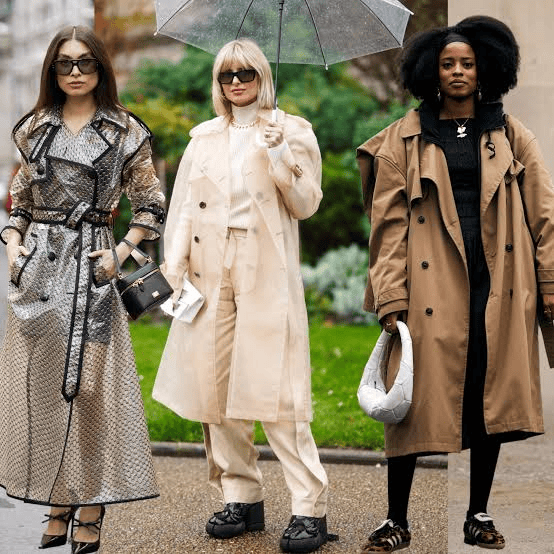
A trench can be a stylish choice for an office wardrobe, especially if you want your outerwear to look intentional rather than purely functional.
Check whether the exact trench is waterproof or water-resistant. Traditional styling does not automatically mean that the coat is suitable for heavy rain.
How to Style a Rain Jacket Over a Blazer
The right combination can keep your outfit professional without making it look bulky.
With Tailored Trousers
Pair a black, navy, or neutral raincoat with tailored trousers, a blouse, and loafers. A clean silhouette and a hem that covers the blazer can create a coordinated commuter outfit.
With a Skirt or Work Dress
A longer raincoat can work well over a work dress or skirt. Check that the coat falls at a comfortable length and does not catch on the skirt when you walk.
With a Structured Blazer
Choose an outer layer with enough room at the shoulders and upper arms. Avoid forcing a narrow jacket over a structured blazer, as this can restrict movement and distort the layers.
With a Lightweight Blazer for Travel
For business travel, a packable rain shell can be convenient if it fits over your blazer and offers appropriate weather protection. Keep the shell accessible in your work bag when forecasts are uncertain.
Choose Accessories Carefully
A compact umbrella can provide additional coverage when you are walking between meetings or waiting for transportation. A water-resistant work bag or protective bag cover can help keep documents and electronics dry.
An umbrella is a useful companion, but it does not replace a suitable jacket when wind-driven rain makes handheld coverage impractical.
Common Mistakes When Buying a Rain Jacket for Work
Buying your normal size without testing layers. Your usual size may fit over a blouse but not over a blazer. Compare measurements and try the jacket with your actual work outfit.
Focusing only on chest width. Shoulder construction, armholes, and sleeve width can determine whether the jacket feels comfortable.
Assuming every trench is waterproof. Check the exact product specifications and seam construction.
Choosing a longer jacket without checking movement. A longer hem can provide coverage but should still allow you to walk, sit, and climb stairs comfortably.
Ignoring sleeve lining. A tight or rough lining can make the jacket difficult to pull over blazer sleeves.
Sizing up without checking proportions. A bigger size may create excess fabric in the body while leaving the shoulders too narrow. Compare alternative cuts if possible.
Relying on a water-repellent finish alone. A surface treatment is not the same as a fully waterproof garment.
Forgetting your commute conditions. A jacket for short walks may not be suitable for a long walk in persistent rain. Match the construction to your actual use.
Frequently Asked Questions
What is the best rain jacket to wear over a blazer?
Start by comparing roomier styles such as the Patagonia Outdoor Everyday Rain Jacket and longer trench designs such as the Athleta Rainout Ridge Long Trench. The best choice depends on your blazer’s measurements, preferred silhouette, and the amount of rain protection you need.
Should I size up in a rain jacket to fit over a blazer?
Not automatically. Compare the shoulder, chest, and upper-arm measurements and test the jacket over your actual blazer. A roomier cut may work better than sizing up in a narrow design.
Is a trench coat waterproof?
Not always. Some trenches are waterproof, while others are water-resistant or designed mainly for light rain. Check the exact fabric, seam construction, and product specifications before buying.
How do I measure a jacket to wear over a blazer?
Wear your blazer and measure your chest, shoulder area, and upper arms as a fit reference. Compare these measurements with the retailer’s size chart, then check sleeve movement and hem coverage while wearing both layers.
Is a longer raincoat better for office wear?
A longer raincoat can cover more of your blazer and trousers or skirt, but it should still allow comfortable movement. Choose a length that works with your outfit and commute.
What is the difference between waterproof and water-resistant?
Water-resistant garments repel some moisture, particularly in light rain, depending on their construction and finish. Waterproof garments are designed to provide a stronger barrier against water. Seam construction, closures, and garment condition also affect protection.
Do sealed seams make a rain jacket waterproof?
Sealed seams help prevent water from entering through stitching, but overall waterproof performance also depends on the fabric, closures, construction, and condition of the garment.
Can I wear a hiking rain jacket over a business blazer?
Yes, if the cut provides enough room and the technical styling suits your needs. Check the shoulders, sleeves, and hem, and make sure the jacket closes comfortably over your work clothes.
What jacket length works best over a blazer?
Hip-length jackets offer mobility, mid-thigh styles balance coverage and movement, and knee-length coats can provide more coverage. Compare the jacket hem with your blazer before purchasing.
Is a water-repellent coating enough for heavy rain?
Not necessarily. A water-repellent treatment helps water bead on the fabric surface, but it does not automatically make the entire garment waterproof. For sustained rain, check the garment’s waterproof construction and seam details.
Can I use an umbrella instead of a waterproof jacket?
An umbrella can be useful in calm conditions and short walks, but wind-driven rain can reach your sleeves, shoulders, and lower body. For regular wet commutes, a suitable rain jacket and an umbrella can complement each other.
How should I care for a waterproof rain jacket?
Follow the manufacturer’s care label. Cleaning and reproofing requirements vary by fabric and coating, so avoid assuming that every jacket can be treated the same way.
Final Verdict: Choosing a Rain Jacket That Fits Over a Blazer
The best rain jacket for a blazer is one that fits comfortably over your actual work outfit and provides the protection you need for your commute. If you prefer a polished look, compare trench-style coats such as the Athleta Rainout Ridge Long Trench and London Fog trench options. If roomier everyday layering matters more, investigate the Patagonia Outdoor Everyday Rain Jacket. For frequent exposure to sustained rain, compare technical shells such as the Patagonia Torrentshell 3L and Outdoor Research Aspire 3L.
Before you buy, remember these four steps:
- Measure your blazer and compare the rain jacket’s chest, shoulder, and sleeve room.
- Test the jacket while reaching, walking, sitting, and fastening the front.
- Check waterproof claims, seam construction, and ventilation.
- Confirm the current size chart and return policy before ordering.
A good commuter rain jacket should protect your work outfit without making you feel restricted. By prioritizing fit, construction, and the conditions you actually face, you can choose a practical outer layer that works with your professional wardrobe.
Further Reading
- Travel + Leisure: The 12 Best Rain Jackets for Women of 2026
- REI: The Best Rain Jackets of 2026
- OutdoorGearLab: The Best Rain Jackets for Women
- Good Housekeeping: Best Raincoats for Women
Research note: These sources offer additional product comparisons and information about rain-jacket construction. WearAndRepeat has not independently tested every jacket in this guide. Product specifications, prices, and availability can change; verify the current retailer listing before adding affiliate links.