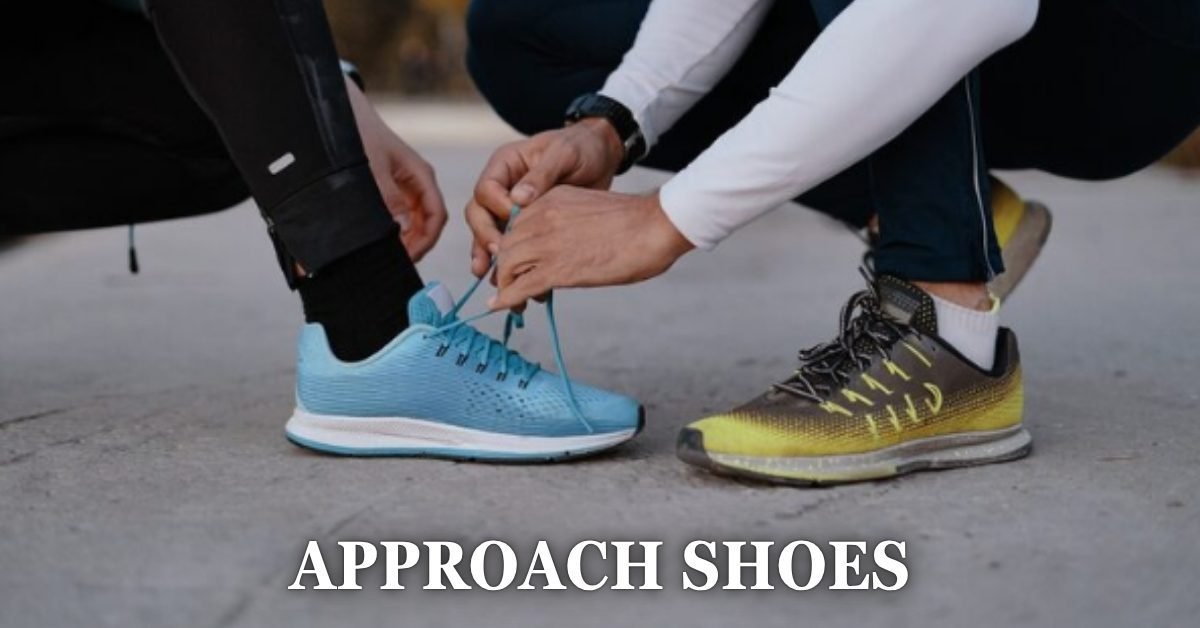
Approach shoes sit in the gap between a hiking boot and a climbing shoe, built for the hike, scramble, and belay session that happens before and after the actual climb. This guide breaks down what separates a real approach shoe from a trail runner wearing a costume, which models are worth your money in 2026, and how to size one so it doesn’t wreck your feet on mile six. You’ll also see where approach shoes have quietly moved off the crag and into regular rotation, since the sticky-soled silhouette has become one of the more interesting crossovers in outdoor footwear. By the end, you’ll know which pair fits your actual use case and how to wear it without looking like you’re headed straight to a rock face.
Quick Answer
Approach shoes are hybrid footwear combining a climbing shoe’s sticky rubber sole with a hiking shoe’s comfort and support, built for the hike to a climb, light scrambling, and belaying. Look for Vibram Mega grip rubber, a roomier toe box than a true climbing shoe, and a stiffer platform than a trail runner.
What Actually Makes a Shoe an Approach Shoe
A lot of shoes get called approach shoes because they look rugged, but the real definition comes down to two things working together. The sole uses a sticky, high-friction rubber compound, usually Vibram Megagrip, extended up into a climbing zone at the toe for smearing and edging on rock. Above that sole sits a build closer to a hiking shoe than a climbing slipper, with a roomier toe box, a supportive midsole, and enough structure to walk for hours without your foot folding sideways on loose scree.
That combination is what separates an approach shoe from both of its parents. A hiking boot is too stiff and too dull-soled to trust on an exposed slab, and a true climbing shoe is too tight and too delicate to hike five miles in with a pack on. Arc’teryx describes its own approach line as usable on fourth-class terrain and even fifth-class terrain with a harness, but not built for routes that demand pinpoint precision the way a dedicated climbing shoe is.
Trail runners get lumped into this category too, and the confusion is fair since some hybrid models blur the line. The real difference is stiffness and rubber compound. A trail runner prioritizes cushioning and flex for repetitive foot strikes, while an approach shoe trades some of that comfort for a firmer platform that holds an edge on rock without folding.
The Approach Shoes Worth Actually Considering
The category is smaller and more specialized than general hiking shoes, which actually makes shopping easier once you know the handful of names that keep showing up across serious gear testing. Price and stiffness matter more here than color, since a shoe built too soft won’t hold an edge and one built too stiff turns painful on a long flat approach.
- La Sportiva TX4 EVO (about $189): a leather-upper workhorse built for long, rough approaches, it balances hiking comfort with genuine climbing precision and takes a while to break in before it feels at home.
- La Sportiva TX2 EVO (about $150): lighter and lower profile than the TX4, better suited to fast scrambles and multi-pitch transitions where pack ability matters more than max durability.
- Scarpa Rapid XT (around $170): a mid-cut hybrid with a recycled 360 rand and Megagrip rubber, aimed at people who want one shoe covering both trail miles and easy scrambling.
- Black Diamond Technician Pro (about $150): built with a running-shoe-inspired midfoot and heel paired with a climbing-ready toe box, it’s comfortable enough for a ten-mile approach and precise enough for technical terrain.
- Five Ten Guide Tennie (around $110): the budget pick and, by most accounts, the original modern approach shoe, still running on the Stealth rubber compound the brand built its reputation on back in the 1980s.
Most testers land on the La Sportiva TX line as the benchmark, largely because the toe rand and rubber compound genuinely hold an edge on rock rather than just looking like they should. The Five Ten is worth calling out separately since it’s the rare budget option that doesn’t feel like a compromise, especially for someone testing whether they’ll actually use a dedicated approach shoe more than a few times a season.
Matching the Shoe to What You’ll Actually Do In It
Buying based on brand reputation alone skips the one question that actually determines fit: what terrain are you covering, and how much of it is real climbing versus real walking. Someone doing a two-mile flat approach to a sport crag has different needs than someone hauling a rack over talus for six miles.
For Real Scrambling and Multi-Pitch Approaches
If the day includes fourth-class terrain, exposed slab, or any stretch where you’d want to trust an edge under your toe, the stiffer La Sportiva or Scarpa models earn their price. The extra rand coverage and firmer midsole matter most exactly here, since a softer shoe folds under body weight on a narrow foothold. This is also where breaking the shoe in before a real trip actually pays off, since a stiff sole straight out of the box feels unfamiliar under load.
For Long, Mostly Flat Approaches
When most of the day is walking rather than climbing, comfort and cushioning start to matter more than maximum stiffness. A shoe like the Black Diamond Technician Pro, with its running-shoe heel and midfoot shape, tends to feel better over ten flat miles than a stiffer climbing-first model. If the terrain stays smooth and well marked rather than technical, a max-cushioned trail shoe such as Hoka’s Speedgoat line can even substitute, trading some rock-edging precision for a softer ride and less break-in time.
For Casual Weekend Use
Someone who climbs a handful of times a year doesn’t need the same shoe as a guide logging approaches every week. The Five Ten Guide Tennie or a mid-tier Scarpa model covers most casual use without the price tag or break-in period of the top-shelf options, and both hold up fine for the occasional scramble between longer hikes in something else.
The Fit Mistake Almost Everyone Makes With Approach Shoes
The most common error is buying an approach shoe the same way you’d buy a climbing shoe, sized down tight for maximum precision. That logic makes sense for a dedicated climbing slipper you’re only wearing for minutes at a time, but it backfires fast on a shoe you’ll be walking miles in.
Approach shoes are meant to fit closer to a hiking shoe, true to size or maybe a half size down, with enough room that toes aren’t jammed against the front on a long descent. Downhill sections make this especially unforgiving, since a shoe sized too small drives toenails into the front of the toe box with every step. That’s a genuinely different fit philosophy than climbing shoes, and conflating the two is why so many first-time buyers end up with a technically excellent shoe they can’t stand to wear past mile three.
Break-in period compounds the problem. Stiffer models like the TX4 EVO need real wear time before the leather softens and the shoe stops fighting your foot on flat ground, so a shoe that feels merely fine in a store can feel genuinely bad three miles into an actual approach if it was already sized too tight to begin with.
Where Approach Shoes Are Actually Landing Off the Trail
Nearly every gear review treats approach shoes purely as equipment, which skips the part that’s actually been happening to the silhouette over the past couple of years. Approach shoes have moved into the same territory as trail runners and hiking sneakers within the broader gorpcore movement, showing up on city streets on people who have never touched a rock face. MR PORTER’s fashion desk has framed the shift plainly, describing the shoe as sitting at the intersection of technical utility and genuine sneaker appeal now that fashion is drifting back toward lower-profile silhouettes rather than bulky hiking boots.
That crossover works because approach shoes already look considered rather than purely athletic. The low-cut, technical upper reads closer to a minimal sneaker than a boot, which makes it easier to fold into an outfit that isn’t built entirely around outdoor gear. A pair in black, olive, or stone sits under straight leg denim or technical pants without the visual bulk a hiking boot carries.
Color and lacing details do most of the work when styling one off the trail. A neutral colorway with a single bright lace or rand detail reads as intentional rather than costume-like, which matters since a full head-to-toe outdoor outfit can tip into looking like you’re actually about to climb something. Pairing the shoe with a plain crew sock that shows slightly above the collar echoes the way climbers wear them without needing a technical pant on the bottom.
Anyone building this into an everyday shoe rotation alongside sneakers, boots, and loafers is basically applying the same core shoe wardrobe logic that governs any other category, just with one genuinely rugged option in the mix. The shoe still needs to earn its spot rather than sitting unworn because it looks technical in photos.
Conclusion
Start by being honest about how much real climbing and scrambling you’ll actually do, since that decision drives everything else about stiffness, price, and sizing. Size closer to a hiking shoe than a climbing shoe, budget real break-in time before a big trip, and don’t be afraid to let one pair do double duty on both the trail and the sidewalk. A well-chosen pair of approach shoes earns its keep in more places than the name suggests.
FAQ
What’s the difference between approach shoes and hiking shoes?
Approach shoes use a stickier, climbing-grade rubber compound and a toe rand for edging on rock, while hiking shoes prioritize cushioning and tread depth for dirt trails. Hiking shoes generally win on comfort over long flat miles, while approach shoes win the moment real rock scrambling enters the picture.
Can you wear approach shoes for everyday walking?
Yes, and it’s become common enough to be its own small trend, though the stiffer, climbing-focused models feel less forgiving on pavement than models built with more hiking comfort in mind. A softer, trail-runner-adjacent approach shoe tends to work better for daily wear than a max-stiffness climbing model.
Do approach shoes run true to size?
Most brands recommend sizing closer to a hiking shoe than a climbing shoe, true to size or a half size down at most, since a shoe sized too tight becomes painful on long descents. Sizing varies enough between brands that checking a specific model’s fit notes is worth the extra two minutes before ordering.
Can you rock climb in approach shoes?
Approach shoes can handle easy scrambling and even some fourth or fifth-class terrain with a harness, but they lack the precision of a dedicated climbing shoe on anything technical. Most climbers swap into real climbing shoes once the route demands accurate foot placement rather than general traction.
Are approach shoes good for wide feet?
Fit varies significantly by brand, with Scarpa and Black Diamond generally offering a roomier toe box than La Sportiva’s narrower European last. Trying a model in person or checking a brand’s specific width notes matters more here than with most other shoe categories, since the climbing-oriented shape can run narrow even in a nominally “true to size” listing.