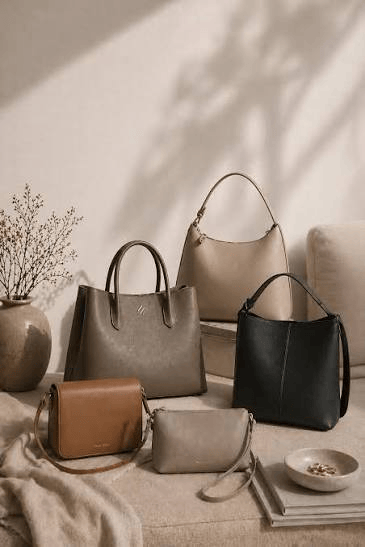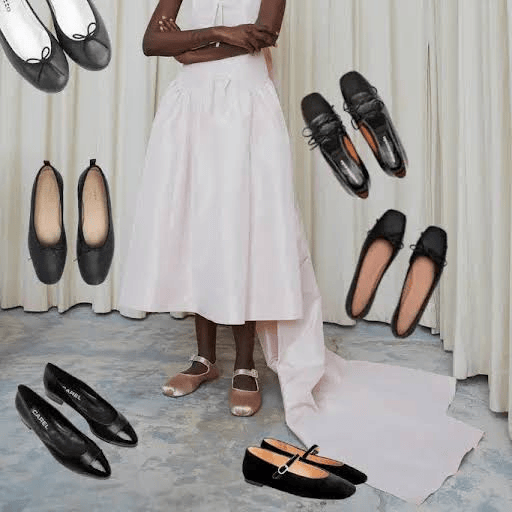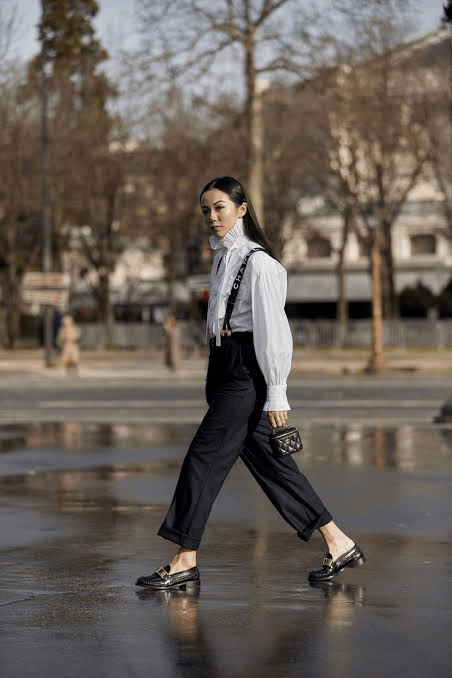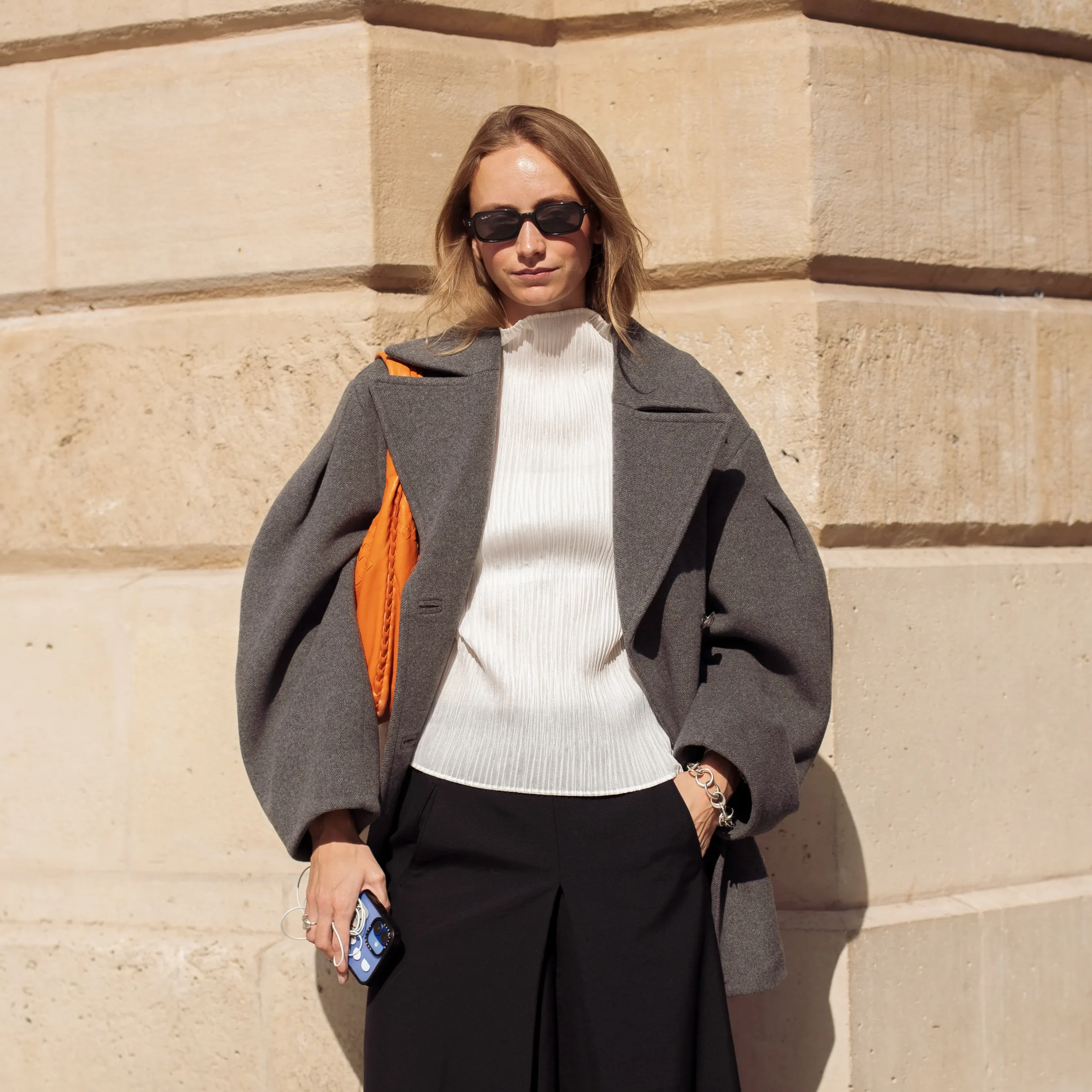
Fashion trends 2026 add up to a genuinely confusing year, with five different color forecasters naming five different shades of the year and runway reports swinging between quiet restraint and full maximalist within the same season. This guide sorts through that noise and shows which of this year’s fashion movements are worth building into a wardrobe you already own, and which ones are better admired from a distance. Instead of another shopping list, you get a clear read on the actual silhouettes, colors, and fabrics defining 2026, plus one simple test to run before spending on any of it. By the end, you will know which pieces deserve a spot in your closet this year and which ones can stay on the runway.
The Short Version
Fashion trends 2026 center on transformative teal and cloud white as color anchors, satin, checks, and animal print in fabric, and shrunken tailoring or ornate jewelry in silhouette, with a real pushback against pure quiet luxury toward warmer, more expressive dressing.
The Color Story Every Forecaster Disagrees On
Pantone opened the year by naming Cloud Dancer, a soft off-white, as its official color of the year, the first time in the institute’s history that the top pick has been a shade of white rather than a saturated hue. WGSN countered with Transformative Teal, a deep blue-green pitched as a symbol of renewal and calm. Pinterest split the difference entirely, forecasting a cluster of shades that includes a warm persimmon, a soft cool blue, and a moody plum noir, while Stitch Fix picked chili red based on its own client styling data. That leaves four major forecasters with four unrelated answers, none of them technically wrong, each one simply reading a different corner of the same fractured picture.
None of this disagreement matters as much as the trend pieces suggest, because most of it is happening at the accent level rather than the foundation. A deep teal and a warm off-white are not actually competing with each other, since one works as a grounding neutral and the other as a rich, occasional pop against it. Persimmon, plum noir, and chili red all fall into that same accent category, meaning they are colors to add in small doses rather than colors to rebuild a wardrobe around. Treat the color of the year conversation as a menu of accent options rather than a single correct answer, and the confusion mostly disappears.
A useful rule for 2026 is to pick one saturated accent color that already complements what hangs in your closet, then use it sparingly across a scarf, a bag, or a single knit rather than head to toe. Someone whose wardrobe already leans warm neutrals will get more mileage out of persimmon or chili red, while someone built around cool grays and navy will find plum noir or transformative teal easier to fold in. The white conversation is the simplest to adopt, since a Cloud Dancer sweater or trouser reads as a slightly softer neutral rather than a bold statement. Whichever shade wins out in your own closet, the goal is compatibility with what already works, not loyalty to whichever forecaster shouted loudest.
The Fabrics and Silhouettes Actually Showing Up This Year
Away from the color debate, the fall 2026 runways were unusually clear about fabric and shape. Paris and Milan both leaned hard into check and tartan prints, with Chloe, Burberry, and Acne Studios all showing collections built around clashing plaids, while satin returned as the season’s dominant fabric in camisoles, skirts, and slip dresses. Skirt suits made a real comeback too, echoing a sharper, ladylike tailoring after several seasons of relaxed proportions, and fur, both real and faux, appeared across outerwear at houses like Ann Demeulemeester and Alexander McQueen. Animal print rounded out the list, showing up as everything from leopard coats to snakeskin pumps rather than a single obvious print.
Tailoring took a sharper turn as well, with shrunken blazers and cropped jackets showing up at Gucci and elsewhere, cut close enough to look almost undersized on purpose. Jewelry moved in the opposite direction from the minimalist studs of the past few years, favoring baroque-style earrings, statement chokers, and vintage-leaning brooches instead. Eveningwear followed the same ornate mood, with velvet, brocade, embroidery, and fringe replacing the stripped-back slip dresses that dominated red carpets not long ago. Put together, the overall silhouette story for 2026 is more structured on top and more decorated in the details than it has been in years.
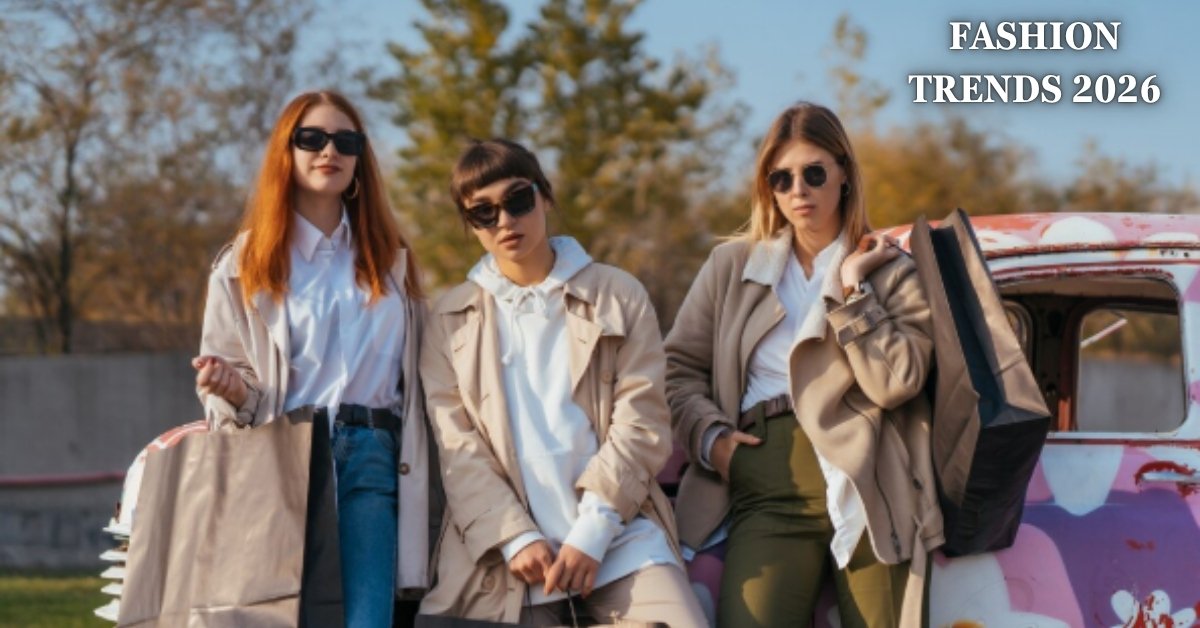
Layering is the practical thread running underneath all of it, since cooler weather naturally rewards outfits built in pieces rather than one statement item. Trench coats, barn jackets, and suede outerwear in warm browns are showing up as the connective layer that lets a satin top or a check skirt actually get worn on a normal day. That is arguably the most useful trend on this entire list, because layering pieces do not go out of style the way a single loud print eventually does. A good trench or a well-cut suede jacket bought this season can realistically outlast several color and print cycles.
Where the “Quiet Luxury Is Dead” Headlines Get It Wrong
A wave of headlines this year has declared quiet luxury dead, replaced by 80s-style power glam, sculptural shoulders, and gold everything. The confusion happens because quiet luxury stopped being a philosophy and became a searchable aesthetic somewhere around 2023, complete with its own mood boards and shopping guides. Once something becomes a trend in its own right, it is vulnerable to being declared over the moment a louder trend arrives to replace it in headlines and social feeds. That is exactly what has happened here, and it has very little to do with how people are actually dressing.
The correction worth making is that quiet luxury was never really about beige minimalism in the first place. It was a philosophy built around quality construction, considered fit, and buying fewer, better pieces instead of chasing whatever just walked a runway. Nothing about ornate jewelry or a satin blouse actually conflicts with that philosophy, since both can be well made, versatile, and chosen with the same restraint that quiet luxury was always supposed to represent. What is actually fading is not quiet luxury itself but the narrow, beige-only version of it that got flattened into a single look for the sake of easy content.
For a reader building a real wardrobe, the practical takeaway is to keep the quiet luxury foundation, well-fitted basics in a few flattering neutrals, and treat this year’s opulent details as accents layered on top rather than a wholesale style switch. A baroque earring worn with a plain wool coat still reads as considered rather than costume. That combination is closer to what quiet luxury always meant than either the all-beige version or the full maximalist reset that headlines keep promising. The two aesthetics were never actually at war outside of marketing copy.
The Cost-Per-Wear Test Before You Buy Into Any Trend
Cost per wear is a simple way to judge whether a trend piece is actually worth the money, and it works by dividing the price of an item by the realistic number of times you will wear it. A sixty dollar satin top worn fifteen times over two seasons costs about four dollars per wear, which is a genuinely good return for a piece that photographs well and layers easily. A two hundred dollar statement coat worn forty times across three winters lands at around five dollars per wear too, even though the sticker price looks far more intimidating on the rack. The math often surprises people, since an expensive piece worn constantly can cost less per wear than a cheap piece that only comes out twice.
Run that same math against this year’s more decorative trends before buying in, and the picture gets a lot clearer. An embellished evening top covered in fringe or heavy brocade might only get worn twice a season before it starts to feel repetitive, which can push the real cost per wear surprisingly high even at a moderate price point. A check print blazer or a satin camisole, on the other hand, tends to mix easily into outfits you already wear, which keeps the number low no matter what it cost upfront. The trend itself matters less than how many different ways a single piece can realistically be styled.
Versatility is really what the cost-per-wear test is measuring underneath the arithmetic. Before buying into ornate jewelry, animal print, or any of the season’s louder ideas, try picturing three separate outfits you already own that the new piece could realistically join. If nothing comes to mind after a minute of genuine thought, that is a useful signal to skip the purchase rather than a reason to talk yourself into it. A trend piece that only works with one outfit is not really a wardrobe addition, it is a costume waiting for a single occasion.
Building 2026 Trends Into a Wardrobe You Already Own
A workable limit is two trend pieces per season, each one chosen because it already relates to a color or fabric you own rather than because it looked good on a runway. Someone who already wears a lot of camel and chocolate brown can add a check print scarf or a two-tone shoe without the rest of the closet needing to catch up. Someone whose closet leans black and white will get more use out of a single satin piece or a Cloud Dancer knit than out of a full animal print coat that fights with everything else on the rail. If you want a longer starting point for that kind of planning, building a small, repeatable wardrobe around the pieces you already reach for is a good place to work outward from.
For lower stakes ways to test a trend, accessories are the easiest entry point into any of this year’s louder ideas. A single ornate earring, a check print scarf, or a small persimmon-colored bag lets you try the mood of 2026 without committing to a full garment in an untested print or silhouette. Clothing pieces are worth saving for trends you have already tested at accessory scale and genuinely reached for more than once. That staged approach protects your budget while still letting your closet feel current instead of frozen in place.
Season and climate matter here too, since not every 2026 trend translates evenly across the year. Satin, checks, and the season’s warmer browns are built for layering weather and will earn their keep fastest if autumn and winter are when you actually get dressed up. Animal print and bold color accents work in any season, since a persimmon bag or a leopard flat does not care what the temperature is outside. Building around what your actual climate and calendar reward, rather than what a September runway show happened to send out, is what keeps a wardrobe from filling up with pieces that only make sense for six weeks a year.
Conclusion
The most useful move for fashion trends 2026 is not picking a side in the color-of-the-year debate or rushing to buy every runway idea before autumn ends. Run the cost-per-wear test on anything that catches your eye, and let items earn a spot based on how many outfits they can actually join rather than how loudly they trended. Start small, one accessory or one accent color at a time, and the pieces that deserve to stay will make themselves obvious within a season.
FAQ
What is the color of the year for 2026?
Pantone named Cloud Dancer, a soft off-white, though WGSN picked Transformative Teal and Pinterest forecasts persimmon, cool blue, and plum noir instead, so there is no single agreed answer this year.
Is quiet luxury still in style in 2026?
Yes, though it has shifted toward warmer, more expressive dressing rather than the strict beige minimalism it started as a few years ago.
How many trend pieces should I actually buy each season?
Two is a reasonable limit, and each one works best when it already relates to a color or fabric already in your closet.
What fall 2026 trends are worth skipping?
Heavily embellished eveningwear and other single-occasion pieces tend to have the weakest cost per wear, along with any trend that does not pair with at least a few things you already own.
How do I know if a trend will still look good on me next year?
Try picturing three different outfits you already own that the new piece could join, and skip the purchase if nothing comes to mind.