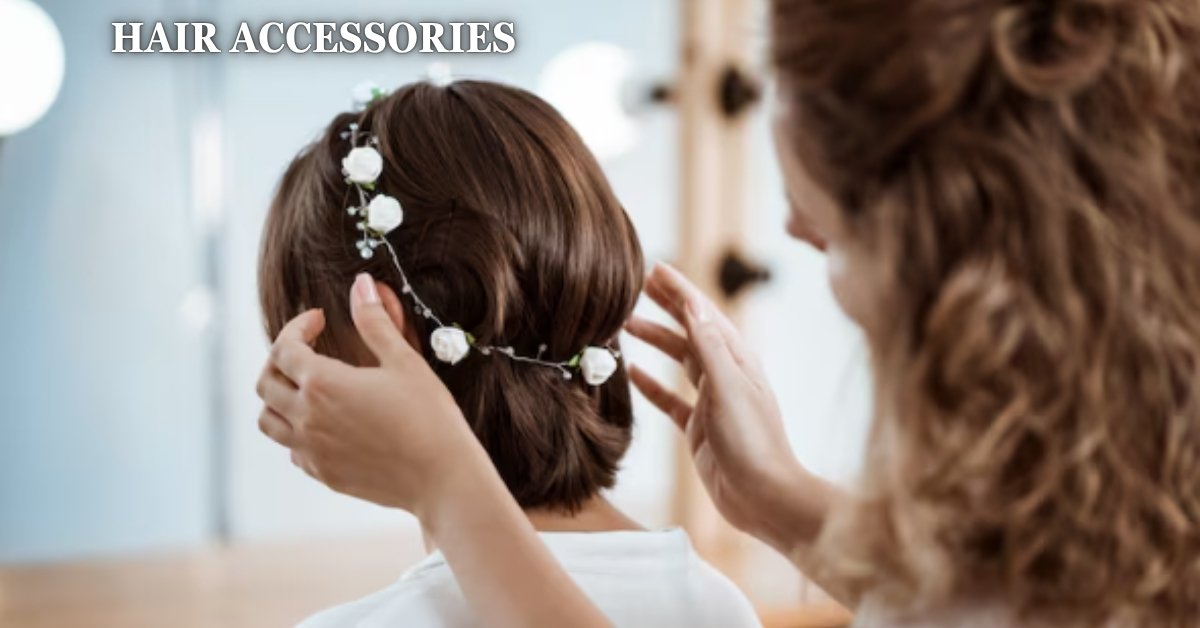
Hair accessories work harder than almost anything else in a wardrobe, holding hair in place for ten hours straight while a necklace just sits there. The piece that actually makes a hairstyle last, and stay comfortable, comes down to matching weight and material to your specific hair, not chasing whatever claw clip is trending this month. This guide walks through the real categories of hair accessories, the material differences that decide whether one lasts a season or five years, and how to match pieces to hair type, face shape, and occasion so nothing you buy ends up sitting unused in a drawer.
In Short
Hair accessories fall into three functional groups: hold pieces like claw clips and pins, wrap pieces like scrunchies and headbands, and decorative pieces like combs and barrettes. The right choice depends less on trend and more on matching material weight to hair density and texture.
What Hair Accessories Actually Do, Beyond Looking Good
Most guides to hair accessories treat them as pure decoration, which misses why some pieces earn daily wear and others get worn once and abandoned. Every hair accessory does one of three jobs: it holds hair in a fixed position, it wraps hair loosely to control volume, or it decorates hair that’s already styled and doesn’t need much structural help. Claw clips, bobby pins, and jaw clips fall into the hold category, and they’re judged almost entirely on grip strength and how long they stay closed under real movement. The category has existed far longer than any current trend cycle, too. Ornamental hairpins and headbands date back to ancient Mesopotamia and Egypt, and historical accounts of hair adornment show materials shifting from bone and gold to plastic and acetate while the underlying function barely changed.
Scrunchies, headbands, and silk wraps fall into the wrap category, since they control hair without gripping it tightly at a single point. Combs, decorative pins, and barrettes sit in the third group, doing light structural work while adding a visible detail. Knowing which job a piece is actually meant to do changes how you shop for it, because a decorative comb bought to hold a full ponytail in place was never going to succeed at that job no matter how well made it is.
The Real Types of Hair Accessories and What Separates Cheap from Good
The material a piece is made from decides almost everything about how it performs, and this is the detail most hair accessory roundups skip entirely in favor of just listing styles.
- Claw clips: Cellulose acetate clips, the kind brands like Machete and France Luxe use, run roughly $22 to $38 and hold thick or heavy hair without the spring mechanism loosening after a few months. Cheap polystyrene clips at $6 to $10 look nearly identical on a shelf but the teeth wear smooth within weeks, so they start slipping on the exact hair type they were bought for.
- Scrunchies: A mulberry silk scrunchie in the $12 to $20 range causes noticeably less friction against hair than a cotton or polyester one, since the smooth fiber doesn’t catch on the hair’s outer cuticle the way woven cotton does. This matters more for color-treated or fine hair, where daily friction from a rough elastic accelerates breakage at the ponytail line.
- Headbands: Padded velvet or leather headbands in the $18 to $35 range distribute pressure across a wider band of the scalp, avoiding the pinch-point headache that thin plastic headbands cause after a few hours. Thin metal or hard plastic headbands are fine for short wear but genuinely uncomfortable past the four or five hour mark.
- Barrettes and hair pins: Metal barrettes with a spring-loaded clasp hold better than snap-shut plastic versions, and gold-plated or enamel-finished pins in the $10 to $25 range tend to keep their finish through regular handling, while cheaper plated metal flakes within a season.
- Combs: Cellulose acetate or horn-style combs, priced around $15 to $30, flex slightly under tension instead of snapping, which matters for anyone using a comb to anchor a bun or half-up style rather than purely for decoration.
Buying by material first and style second is the single biggest shift that separates a hair accessory collection that actually gets used from one that ends up in a bathroom drawer within a year.
Matching Accessories to Your Actual Hair, Not the Model in the Photo
Fine or thin hair needs lighter pressure and smaller-scale pieces, since anything heavy pulls at the root and creates visible tension within an hour. A mini claw clip, roughly two to three inches, or a thin silk scrunchie holds fine hair without dragging it down or leaving a crease that takes hours to brush out. Thick or coarse hair needs the opposite: a jumbo claw clip in the four to five inch range or a wide, structured headband, since anything undersized simply won’t stay closed against that much volume and weight.
Curly and coily hair does best with accessories that don’t compress the curl pattern, which rules out flat, hard-edged clips that leave a visible dent. Fabric-wrapped scrunchies, satin-lined headbands, and wide-tooth combs work with the texture instead of flattening it, and satin lining specifically reduces the frizz that a rough elastic or plastic surface tends to create along the hairline. Straight, silky hair is the trickiest texture for accessories to grip, since there’s nothing for teeth or clasps to catch onto, so pieces with rubberized grip lining or a tighter spring tension hold noticeably longer than smooth metal or plain plastic versions on this hair type.
Where Most Hair Accessory Advice Goes Wrong
The common mistake isn’t picking an ugly accessory, it’s buying based on how a piece looks in a photo rather than how it actually performs on a specific hair type and density. A claw clip that holds a stylist’s thin, styled hair for a photoshoot can fail completely on someone with three times the hair volume, and most reviews never mention hair type at all. This happens because hair accessory marketing photographs models with fairly similar hair texture and length, so buyers assume performance translates across every hair type when it genuinely doesn’t.
The fix is checking grip strength and sizing against your own hair before buying, not after. Look for a stated hair type or thickness recommendation on the product listing, and when a brand doesn’t specify one, treat that as a signal to size up rather than guess. A too-small clip on thick hair will slip within an hour no matter how expensive it was, and no amount of styling technique fixes a fundamental size mismatch between the accessory and the hair it’s meant to hold.
Styling by Face Shape and Placement
Round faces benefit from accessories placed slightly off-center or angled back from the crown, since a clip or headband sitting dead center tends to widen the appearance of the face further. A claw clip positioned at a diagonal, holding hair up and slightly to one side, elongates the face more than the same clip placed straight up. Square or angular faces do well with softer, rounded accessory shapes, pearl clips or fabric-wrapped scrunchies rather than sharp geometric clips, since the soft shape balances the jawline instead of echoing it.
Long or oval faces have the most flexibility and can wear headbands pushed back from the hairline without the same width concerns other face shapes run into. Heart-shaped faces tend to look most balanced with volume and detail lower on the head, so a low bun secured with a comb or barrette works better than a high, tight claw clip that draws attention straight up to a narrower chin. None of this is a hard rule, since hairline shape and hair density change how any of these placements actually read, but it’s a useful starting point when a new accessory isn’t working the way it looked like it would.
Occasion and Seasonal Variations
Everyday and office wear calls for smaller, quieter pieces, a two-inch claw clip or a slim headband, since the goal there is holding hair neatly without becoming the focal point of the outfit. Weekend and casual wear has more room for texture and color, an oversized scrunchie or a printed silk headband, since the setting doesn’t call for the same restraint. If you’re building out a broader collection, the same buy-by-actual-use logic that applies to other worn accessories applies here too: a piece only earns its price if it matches outfits you already wear, not just the one photo that sold it to you.
Formal and wedding-adjacent styling leans toward pearl or crystal-detailed combs and barrettes, since these hold well in an updo while photographing cleanly under flash. Summer heat calls for lighter materials, cotton or linen-wrapped scrunchies and vented headbands, since heavy velvet and leather trap heat against the scalp. Winter and colder months are where structured headbands and heavier claw clips actually perform better, since static and dry hair make lightweight elastics slip more than they would in humid summer conditions. For more ways to round out a considered accessory collection, the full accessories archive covers the rest of what a wardrobe needs beyond hair.
Conclusion
The accessories that earn daily wear are the ones sized and weighted for your actual hair, not the ones that looked good in a five-second video. Start by identifying your hair’s density and texture, then shop material and size before style. That single change does more to build a hair accessory collection that gets used than any trend list ever will.
FAQ
What are the most common types of hair accessories?
The most common types are claw clips, headbands, scrunchies, barrettes, hair pins, and combs, each suited to a different job of holding, wrapping, or decorating hair.
Which hair accessories work best for thin or fine hair?
Smaller, lighter pieces work best, such as a mini claw clip or a thin silk scrunchie, since heavier accessories pull at the root and create visible tension.
Do silk hair accessories actually protect hair from damage?
Silk creates less friction against the hair’s outer layer than cotton or plastic, which can reduce breakage over time, though it doesn’t reverse existing damage.
What hair accessories work best for holding an updo in place?
Metal barrettes with a spring clasp and cellulose acetate combs hold updos most reliably, since they flex slightly under tension instead of slipping loose.
How many hair accessories should you wear at once?
One or two is usually enough, since layering several statement pieces tends to compete for attention rather than reading as intentional styling.