
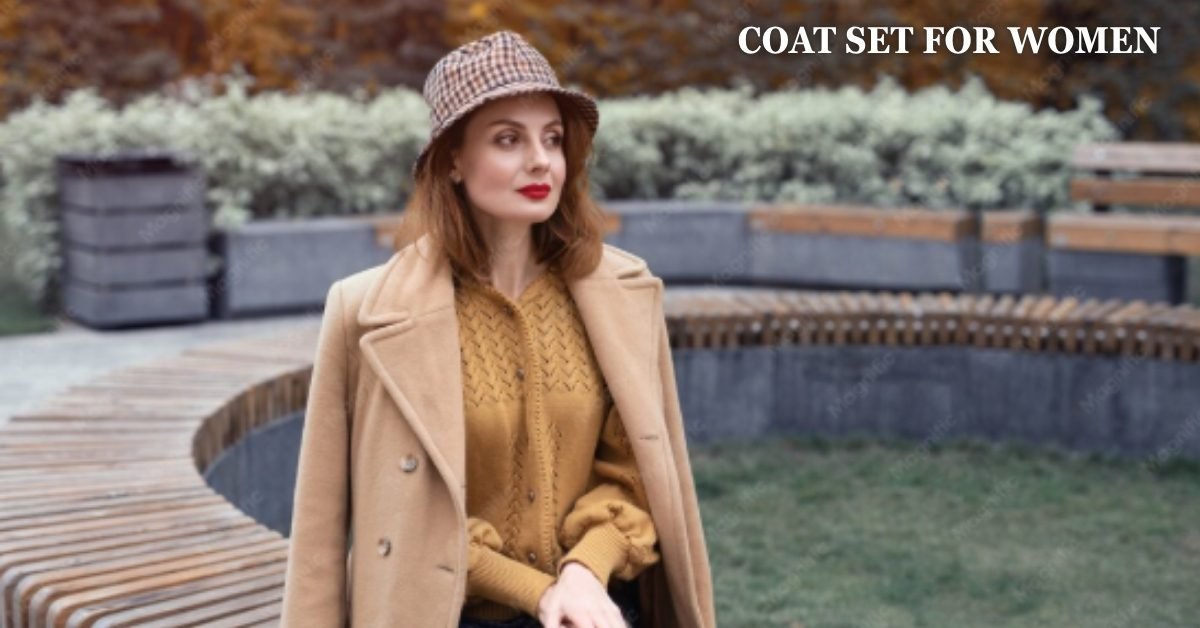
A coat set for women is a matching jacket and bottom cut from the same fabric, built to remove the guesswork of pairing separates while still reading as a complete outfit. The jacket does most of the work, since its cut decides whether the set looks like real outerwear or a stretched blazer with a longer hem. This guide covers what separates a good coat set from a forgettable one, how to size the jacket and bottom independently, and four real ways to wear the set for office days, weekends, evenings, and travel. By the end, you will know what to check before buying and how to get more than one outfit from a single set.
Short Answer
A matching jacket and bottom cut from the same fabric and color define a coat set for women, worn together or split into two pieces. The strongest versions use a true outerwear-weight jacket rather than a thin blazer, fitted precisely through the shoulder so it holds up when worn apart.
What Actually Makes Something a Coat Set
The phrase coat set gets used loosely across most retail sites, and that looseness is exactly where confusion starts. A true coat, in the traditional sense of the word, is a long outer garment meant to sit over other clothing for warmth or weather protection, cut with more structure and heavier fabric than a jacket. Wikipedia’s entry on the garment notes that coats typically close down the front with buttons, zippers, or another fastener, and that the line between jacket and coat has blurred over the past century as tailoring styles shifted. Most items sold as a coat set for women actually use a cropped or hip-length jacket rather than a true coat, closer to a blazer in weight and cut, paired with matching trousers or a skirt.
That distinction matters because it changes what the set can actually do for you. A genuine coat set, where the top piece is long enough and heavy enough to function as real outerwear, replaces both a jacket and a coat in one purchase. A blazer-style coat set, which is what most of the market actually sells, functions as indoor tailoring and needs its own coat layered over it once the temperature drops. Neither version is wrong to buy, but knowing which one you are looking at before you check out saves you from buying a warm-weather two-piece and expecting it to survive a January commute.
Choosing a Coat Set That Actually Fits Your Body and Budget
The two pieces in a coat set are rarely cut on the same sizing logic, even though they ship together. Jacket sizing in most coat sets follows blazer proportions, which run closer through the shoulder and bicep than a casual jacket would, so a size that fits your shoulders comfortably is the size to buy even if the trousers end up sitting slightly loose at the waist. Trousers or a skirt can be tailored at a local shop for a modest cost, but a jacket with tight shoulders is much harder and more expensive to alter, so the top half should always decide the size.
Body proportion changes what silhouette to look for more than any other factor. A boxier, oversized jacket balances a fuller hip when it is paired with a straight or slightly flared trouser leg rather than a matching wide leg, since two loose pieces stacked together can erase the waistline entirely. A fitted, single-button jacket does the opposite job well on a straighter frame, since it creates a defined waist that a fully relaxed two-piece would not. Petite frames generally read taller in a set where the jacket hits right at the hip bone rather than mid-thigh, since a longer jacket on a shorter torso shortens the leg line underneath it.
Price tiers for a coat set for women run wide depending on fabric. A synthetic-blend two piece from a fast-fashion retailer sits at the lower end and works fine for one or two seasons of occasional wear, while a wool-blend or boucle version from a mid-range brand costs noticeably more but tends to hold its shape and color through repeated wear far better. Anyone who wears blazers or structured jackets often enough to justify it usually finds that spending more on the jacket half specifically, even if the trousers are more affordable, produces the better long-term outfit, since the jacket is what actually gets seen and worn on its own most often.
Color and Pattern Choices That Make a Coat Set Easier to Rewear
Color decides how many other things in a closet a coat set can actually talk to. A neutral coat set, in camel, charcoal, cream, or black, pairs with almost everything already hanging in a closet, which is part of why neutral versions tend to get the most repeat wear relative to their price. A colored or printed set works best when the color already exists somewhere else in the wardrobe, a burgundy set next to burgundy accessories or a check print set near an existing plaid scarf, since an isolated color island rarely gets reached for twice. Pattern adds one more layer of difficulty, since a boldly printed jacket and matching bottom worn together reads as a strong, deliberate choice, but the same print becomes much harder to split apart into separate outfits later.
Four Ways to Actually Wear a Coat Set for Women
Buying a coat set only pays off if it earns its price across more than one occasion, and the fastest way to test that before checking out is picturing it working at least three different ways. A set that only ever gets worn as a single matched look is really functioning as one outfit rather than the two or three it should produce for the price. The four scenarios below cover the situations a coat set for women actually gets pulled out for, from a Monday desk day through a weekend trip.
Office Days
For the office, wear the full set together over a simple fitted top in a color that contrasts gently with the set itself, since two matching solid pieces already carry enough visual weight without a third pattern competing for attention. A low block heel or a pointed flat keeps the proportions in check, and swapping the jacket’s top button open instead of closed softens a look that can otherwise read overly formal for a casual office. A thin gold or silver chain adds a small amount of polish without competing with the set’s own lines.
Weekend and Errands
Split the set apart for weekends by wearing just the trousers or skirt with a plain white tee and sneakers, saving the jacket for a second look entirely, maybe thrown over a slip dress or a knit top later that same week. This is really where a coat set earns back its cost, since a set that only ever gets worn as a matched unit is functioning as one outfit rather than two, capped at the exact number of times you are willing to repeat the identical look. A canvas tote and flat sandals keep the look casual enough for errands without fighting the structure already built into the trousers.
Evening Plans
Evening plans put the jacket over a simple camisole or a fitted knit rather than nothing underneath, buttoned low enough to show a slice of the layer beneath, with the trousers or skirt swapped for a strappy heel instead of the flatter shoe worn during the day. A single structured piece of jewelry, a cuff or a pair of statement earrings, is usually enough since the set’s clean lines already do most of the visual work. Skipping a bag entirely in favor of a small clutch keeps the silhouette clean from shoulder to heel.
Travel Days
Travel is where a coat set genuinely outperforms most separates, since one packed piece produces both a plane outfit and a dinner outfit without adding anything extra to the suitcase. Wear the full set with sneakers and a soft scarf through the airport, then swap in the same heels from the evening look and remove the sneakers for dinner once you land, using outfit ideas built around what you already own as a reference for how far a few pieces can realistically stretch. Packing only one structured piece instead of a separate blazer and coat also frees up real suitcase space for everything else on the trip.
The Coat Set Mix-Up That Trips Up Most Shoppers
A common mix-up happens the moment someone searches for a coat set for women expecting an actual overcoat and trouser combination, then opens a retail listing to find a cropped blazer instead. This happens because coat gets used as a catch-all term across e-commerce listings regardless of the garment’s actual length or weight, since the word photographs and searches better than the more accurate blazer set or jacket set. The confusion is not really the shopper’s fault, it is a labeling habit that has stuck around because it converts better in search results than more precise terminology would.
The fix is checking the actual garment length and fabric weight in the product description before assuming the set will function as real cold-weather outerwear. A jacket that stops at the hip and uses a lightweight suiting fabric is built for indoor wear and needs a genuine coat over it once the weather turns, no matter what the listing calls it. A jacket that runs to mid-thigh or longer in a heavier wool or wool-blend fabric can actually replace a coat, and those are worth seeking out specifically if outerwear function, not just a matching look, is the actual goal.
Fabric and Season Notes That Change How a Coat Set Wears
Fabric decides more about a coat set’s real-world performance than color or cut. Wool and wool-blend sets hold structure through a full winter season and resist wrinkling in a way that thinner fabrics cannot, making them the better pick for a set worn on repeat through cold months. Boucle and tweed read more textured and slightly dressier, which suits an evening-leaning wardrobe, while a smooth wool crepe leans more corporate and office-appropriate straight out of the closet.
Warmer weather calls for a completely different fabric logic, since a heavy jacket becomes unbearable the moment temperatures climb. Linen and linen-blend coat sets, along with lighter cotton twill versions, have become one of the more practical additions to recent matching-set lineups, holding their shape without the weight of a true wool coat. A cotton poplin version splits the difference, holding a crisper shape than linen while still breathing enough for a warm office or a spring wedding.
Layering trends have also pushed three-piece versions, where a matching top and bottom pair with a separate lightweight coat instead of a built-in heavy jacket. This solves the summer-to-winter problem by letting the base set stay light while only the outer layer changes with the season. Running a cost-per-wear check before committing to a heavier investment piece is worth doing here too, especially once a set moves from casual wear into genuine investment territory.
Conclusion
The most useful move with any coat set for women is checking the jacket’s actual length and fabric weight before buying, then planning at least two ways to wear it apart before ever buying it as a matched unit. A set that only works as one fixed look is not really pulling its weight in a closet, no matter how put-together it photographs on day one. Start with the jacket size, since everything else about the fit can be adjusted from there.
FAQ
Can a coat set be worn as separate pieces?
Yes, most coat sets are designed to split apart, with the jacket working over other outfits and the trousers or skirt pairing with a plain top on their own.
Is a coat set the same as a suit?
Not exactly, a suit traditionally refers to matching tailored pieces cut specifically for formal or business wear, while a coat set covers a wider range of fabrics and occasions, including casual and evening versions.
Can a coat set be worn in warm weather?
Yes, linen, cotton twill, and other lightweight fabric versions are built specifically for warmer months, while wool and boucle sets are better suited to cold weather.
How do you dress down a coat set for casual wear?
Split the pieces apart, pair the trousers or skirt with a t-shirt and sneakers, and save the jacket for a separate, more polished look later.
What should you check first if you’re buying a coat set without trying it on?
Prioritize the jacket’s shoulder and bicep measurements over the trouser fit, since a jacket with tight shoulders is far harder to alter than trousers or a skirt.