Dewy makeup gives skin a soft, hydrated shine instead of a flat, powdered finish, and getting it right comes down to product choice and application order more than any single trick. This guide walks through the exact routine that builds that lit-from-within look, from skin prep through the specific point where most people accidentally slide into greasy territory. You’ll see which products actually earn the word dewy, how much of each one to use, and where the technique shifts for oily skin, dry skin, and skin that has started showing more texture with age. By the end, you’ll know how to build the look step by step and keep it looking fresh well past lunch.
The Short Answer
Dewy makeup means building a hydrated, glowing finish with cream and liquid products instead of powder, starting with well-moisturized skin and a hydrating primer, then layering a luminous foundation, cream blush, and highlighter before locking everything in with a light setting spray.
What Dewy Makeup Actually Means
Dewy makeup describes a finish, not a specific product or brand, and it sits at the opposite end of the spectrum from matte. Where matte makeup absorbs shine and flattens the skin’s surface into one even texture, dewy makeup lets light bounce off the high points of the face the way healthy, hydrated skin naturally does. The goal is skin that looks like it just came from a facial rather than skin covered in a heavy layer of product.
That distinction matters because dewy makeup is built from ingredients, not just techniques. Cream and liquid formulas tend to contain humectants like glycerin and hyaluronic acid, which work by drawing moisture into the skin’s outer layer rather than sitting on top of it, a mechanism worth understanding if you want to know how moisturizing ingredients actually function. Powder formulas, by contrast, are built to absorb oil and diffuse light rather than reflect it, which is exactly why swapping a matte powder foundation for a dewy one rarely produces the look on its own.
Building a Hydrated Base Before Any Makeup Goes On
Skin has to actually be hydrated before makeup can look dewy, since no primer or foundation can fake moisture that isn’t there underneath it. Start with a gentle cleanser, then a hydrating serum while skin is still slightly damp, followed by a moisturizer suited to your skin type. Dry skin benefits from a richer cream, while oily and combination skin generally does better with a lightweight, gel-based formula that hydrates without adding extra slip.
Give that moisturizer a few minutes to fully absorb before touching a primer. Skipping this step is the single most common reason a dewy look turns patchy within an hour, since foundation applied over unabsorbed cream tends to pill and slide rather than sit smoothly. If your skin regularly runs tight or flaky, working in a facial oil at night rather than in the morning routine helps the skin bank moisture without adding grease right before makeup goes on.
The Product Order That Builds Real Dew
Once skin is prepped, a hydrating or illuminating primer goes on next, applied in a thin layer focused on the cheeks, forehead, and bridge of the nose rather than the entire face. A pea-sized amount is genuinely enough for most people, since primer is meant to prep the surface rather than add its own visible layer. Pressing it in with clean fingers, rather than rubbing, keeps the product from disturbing the moisturizer underneath.
Foundation comes next, and the formula matters more here than almost anywhere else in the routine. Skin tints, serum foundations, and liquid foundations labeled luminous or radiant are built with the same humectant-heavy base as a good moisturizer, which is why they blend into skin instead of sitting on it the way a full-coverage matte foundation does. Baked foundations occupy a middle ground worth knowing about too, since brands that formulate specifically for mature or sensitive skin, like the one covered in this site’s breakdown of Laura Geller’s baked foundation line, tend to lean into that same hydrated, glow-forward finish rather than a flat matte one.
Concealer should go on after foundation, not before, and only where you actually need coverage. Dabbing rather than dragging keeps the under-eye area from creasing, and a damp makeup sponge blends both products into the skin far more seamlessly than a dry brush ever will.
Where Blush and Highlighter Actually Go
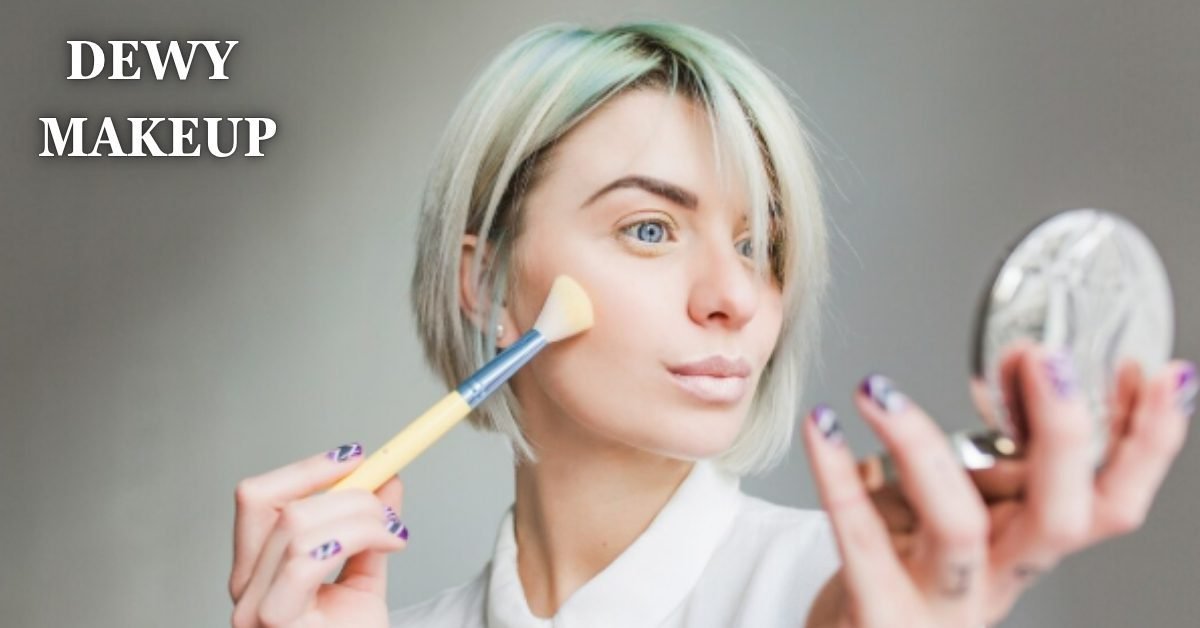
Cream blush and cream highlighter are what separate a genuinely dewy finish from one that looks dewy only in foundation and flat everywhere else. Tap cream blush onto the apples of the cheeks with two fingers, then blend upward toward the temple in small circular motions, since dragging the product downward tends to flatten the color rather than diffuse it. A little goes further than it looks like it will on the back of your hand.
Highlighter placement is where most tutorials get vague, so here’s the specific version. Three small dots, one on the highest point of each cheekbone and one just above the cupid’s bow, tapped in rather than swiped, gives a natural sheen without the strobe-light effect that heavy powder highlighters can create. Skip the brow bone entirely if your skin already runs oily in that area, since doubling up on shine there is one of the fastest ways to tip a look from dewy into overdone.
The Line Between Dewy and Greasy
The most common misunderstanding about dewy makeup is that more product means more glow, when the opposite is usually true. Once skin has enough hydration and one or two strategically placed cream products, additional layers stop adding radiance and start adding weight, and weight is what reads as greasy under normal indoor lighting. The confusion happens because a freshly applied dewy look photographs beautifully in soft, filtered light, which makes people assume piling on more product will only improve it.
The actual fix runs in the opposite direction. Instead of adding another layer of highlighter when a look feels flat by midday, blot the T-zone lightly with a tissue first, then reassess whether it genuinely needs more product or just needs the existing product redistributed. Skin naturally produces oil throughout the day, and that oil often does the highlighter’s job for you by early afternoon, so the smartest move is frequently to add nothing at all.
Dewy Makeup on Oily and Mature Skin
Oily skin can absolutely wear dewy makeup, but the strategy shifts slightly to avoid genuine shine turning into unwanted grease. Using an oil-free hydrating primer specifically in the T-zone, then setting only that same T-zone with a light dusting of translucent powder, lets the cheeks and outer face stay dewy while the areas prone to breaking through stay controlled. Skipping powder entirely on oily skin is usually the mistake, not the cure.
Mature skin tends to be the profile dewy makeup was built for in the first place, since hydrating formulas sit better on fine lines than powder-heavy matte products do. Powder tends to settle into texture and emphasize it under light, while cream and liquid formulas move with the skin instead. That’s part of why brands formulating specifically for aging skin, including the mature-skin-focused line covered in this site’s Laura Geller review, lean so heavily into buildable, glow-forward finishes rather than flat coverage.
Making It Last Without Losing the Glow
A hydrating setting spray, held six to eight inches from the face and misted in a loose X pattern followed by a T across the forehead and down the nose, locks the look in place without dulling the shine the way a full dusting of setting powder can. Spraying too close concentrates the product in one spot and can actually break down foundation rather than seal it. Letting the spray air-dry for a few seconds before touching your face keeps the finish intact through the first few hours of wear.
Carrying a small kit for touch-ups matters more with dewy makeup than with matte, since a cream blush stick and blotting papers take up far less room than a full compact and powder brush. Keeping those touch-up pieces in a dedicated pouch, the kind covered in this site’s guide to setting up a makeup bag that actually stays organized, means you’re not digging through a bag full of half-used products every time you need a two-minute refresh in a bathroom mirror.
Matching a Dewy Face to What You’re Wearing
A detail most beauty guides skip entirely is that a dewy finish has a temperature, and that temperature can either clash with or complement what you’re wearing. A peachy or golden highlighter throws warm light onto the skin, which pairs naturally with warm-toned clothing, gold jewelry, and camel or rust-colored pieces, since the metals and fabric tones pick up the same warmth the skin is reflecting. A champagne or pink-toned highlighter runs cooler and reads better against silver jewelry and cool-toned blues, greens, and true reds.
This isn’t a strict rule, but it explains why a dewy look can feel slightly off with an outfit even when the makeup itself is well executed. Swapping a golden highlighter for a cooler pink one before a night out in silver jewelry, or the reverse before reaching for gold hardware, is a small adjustment that most makeup routines never account for.
Conclusion
Dewy makeup comes down to hydrated skin first, cream and liquid products second, and restraint with how much you actually apply. Start with the skin prep, build the base in order, and resist the urge to add more highlighter every time the glow settles by midafternoon. Once the routine feels familiar, adjusting the finish’s warmth to match what you’re wearing is the next small upgrade worth trying.
FAQ
Is dewy makeup good for oily skin?
Yes, as long as the T-zone gets a light layer of oil-free primer and a touch of translucent powder, while the cheeks and outer face stay in cream and liquid products for the actual glow.
What’s the difference between dewy makeup and glowy makeup?
Dewy specifically refers to a hydrated, skin-like sheen built with cream and liquid products, while glowy is a broader term that can include shimmer, highlighter, and even sun-kissed bronzer effects that aren’t necessarily about hydration.
How do I keep dewy makeup from turning shiny or greasy by midday?
Blot lightly with a tissue before adding any more product, since existing oil often finishes the look for you, and set only the areas that genuinely need it rather than the whole face.
Does dewy makeup work on mature or aging skin?
Yes, and it often looks better than matte finishes on mature skin specifically, since hydrating cream and liquid formulas sit smoothly over fine lines instead of settling into them the way heavier powder products can.
Can I still use powder with a dewy makeup look?
Yes, a light dusting of translucent powder on just the T-zone controls shine without flattening the rest of the face, as long as you avoid pressing powder into the cheeks or highlighter placement.