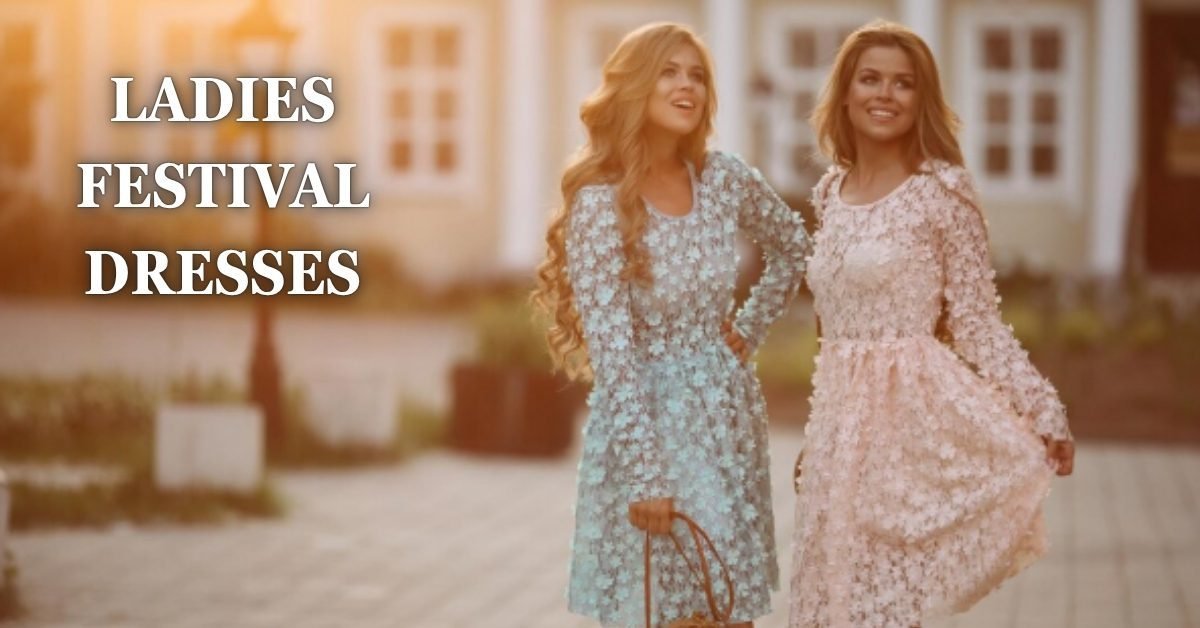
Ladies festival dresses need to do more work than almost anything else in a summer wardrobe. A good one has to survive eight or more hours of standing, walking, and dancing, hold up through a temperature swing of twenty degrees or more between noon and midnight, and still look intentional in every phone photo taken along the way. This guide breaks down the fabrics, lengths, and silhouettes that actually hold up under those conditions, sorted by the kind of festival you’re actually going to. By the end, you’ll know exactly which dress shape fits your event, your body, and the ten hours you’re about to spend in it.
Short Answer
The best ladies festival dresses are made from lightweight woven fabrics like rayon challis or cotton voile, cut in a length that clears the knee for dancing, and paired with bike shorts underneath and a crossbody bag so nothing needs to be held all day.
The Fabric Choice That Decides Whether You Wilt or Not
Most festival dress guides talk about prints and cutouts before they talk about fabric weight, which is backwards. A dress in a lightweight woven fabric, something in the range of 100 to 140 grams per square meter, moves with the body and releases heat instead of trapping it against skin. Rayon challis and cotton voile both fall in that range and explain why so many of the flowier boho dresses photograph well without looking wilted by 3 p.m.
Jersey knit dresses feel comfortable off the rack, but they cling to sweat and take longer to dry, which becomes a real problem once the sun is at its highest point. If a dress is going to see six or more hours outdoors, a woven fabric with a little bit of give at the waist, rather than a fully stretch knit, tends to hold its shape and its shade of color far better after repeated sweating and sun exposure.
Linen blends are worth considering for daytime-only festivals with a strict dress code toward polish, since linen resists clinging and breathes exceptionally well, but pure linen wrinkles fast once you sit on grass or a folding chair. A linen and rayon blend solves that specific problem and still reads as put together after a full day.
Silhouettes That Actually Move With You
The tiered mini dress has become the unofficial uniform of festival season, and it earns that spot honestly. The layered ruffle hem swings with movement instead of restricting it, and the shorter length keeps fabric away from your ankles during a packed crowd or a muddy field.
Maxi dresses solve a different problem entirely, offering sun coverage and a more polished silhouette for festivals with a folk or Americana lineup rather than a dance-heavy one. Getting the length and fit right matters more here than with any other silhouette, and a closer look at how to choose the right cut for your height and body shape is worth reading before you commit to one for a full day on your feet.
Two-piece festival sets, a cropped top paired with a matching flowy skirt, give you the visual effect of a dress with one practical advantage a true one-piece can’t match, the ability to use a bathroom without removing the entire outfit. That single detail becomes surprisingly important after the second or third hour of a festival day, and it’s why so many repeat festivalgoers eventually switch to sets even when they still call the look a dress in every caption.
Dressing for Your Festival, Not Just “Festival” as One Look
Treating every festival as one interchangeable dress code is where a lot of guides fall short. A folk or Americana lineup calls for something closer to the bohemian style that made Coachella’s early years so recognizable, think crochet detailing, earthy tones, and flowing rayon or cotton silhouettes that photograph beautifully in natural light. That aesthetic traces back to a much older bohemian tradition built around flowing fabric and free movement, and it still shapes what reads as “festival appropriate” today.
EDM and rave lineups call for an entirely different fabric conversation, since these events run late into the night under stage lighting rather than sun. Metallic finishes, sequins, and mesh layering catch strobe lights in a way that matte cotton simply cannot, so a shorter, structured mini dress in a reflective or sequin fabric earns its place here even though it would look out of place at a daytime folk festival.
Country music festivals sit somewhere in the middle, favoring a fitted mini or midi dress in denim, gingham, or a soft floral print, usually worn with boots rather than sandals. Matching the dress to the actual lineup and setting, rather than defaulting to whatever look is trending on social media that week, is the fastest way to avoid feeling overdressed or underdressed once you’re actually there.
The Detail Almost Every Festival Dress Guide Skips
Nearly every list of festival dresses talks about print, fringe, and color, and almost none of them mention what happens to a dress after two hours of actual dancing. A hemline that looks perfectly modest standing still can ride up dramatically the moment you raise your arms or move through a crowd, and the only real way to test this before you buy is what stylists sometimes call the arm-raise test, lifting both arms overhead in the fitting room or in front of a mirror at home to see exactly how much the hem travels.
Bike shorts worn underneath solve this problem completely and have become close to standard practice among frequent festivalgoers, since they add coverage without adding visible bulk under a flowy skirt. A neutral, skin-tone pair disappears under most fabrics, while a bold color peeking out from under a fringe hem has become its own small styling trend at more fashion-forward events.
The other detail worth checking before you buy is the closure. A dress with a full back zipper is genuinely harder to manage in a festival bathroom line than one that pulls on or ties, and that single design choice affects your comfort far more over a ten-hour day than the print or the color ever will.
Layering for the Temperature Drop After Dark
Desert and outdoor festivals routinely see temperature drops of twenty to thirty degrees Fahrenheit between the afternoon peak and the early morning hours, which catches first-time festivalgoers off guard almost every season. A lightweight denim or suede-look jacket in a neutral shade works over nearly every dress silhouette without fighting the outfit underneath, and it packs down small enough to carry all day without becoming a burden.
For EDM and late-night sets specifically, a thin puffer or fleece layered under a jacket handles the post-midnight chill without adding the bulk of a full coat, which matters when you’re still planning to dance until close. Packing this layer before you leave, rather than hoping the temperature stays mild, is the difference between an outfit that photographs well at golden hour and one that also gets you comfortably through last call.
Where to Spend and Where to Save
A solid tiered mini or maxi dress in a natural fiber blend typically runs somewhere between 45 and 90 dollars from mid-range retailers, and that price range usually buys a fabric weight and stitching quality that survives repeated wear across an entire festival season. Below roughly 30 dollars, expect thinner polyester that clings, pills faster, and tends to lose its shape after one or two washes.
Sequin and metallic pieces built for EDM and rave settings tend to sit higher, often in the 60 to 130 dollar range, largely because the reflective finish requires a heavier base fabric to hold the embellishment without sagging. Saving money on accessories rather than the dress itself, since sunglasses, bags, and jewelry get far less wear per dollar than the actual outfit, tends to stretch a festival budget further than cutting corners on the dress.
Finishing the Look Without Overdoing It
A festival outfit lives or dies on what you’re carrying, since a shoulder bag that needs constant adjusting becomes exhausting by hour three. A small crossbody bag, worn across the body rather than on one shoulder, keeps both hands free for exactly the kind of moving around a festival day requires, and it counts as one of the few genuinely functional pieces in the whole outfit rather than a purely decorative one.
Layered necklaces and a few stacked bracelets read as intentional without requiring much thought, and they photograph well against nearly every dress silhouette covered above. Anyone unsure where jewelry, bags, and other add-on pieces fit into an outfit versus what actually counts as the outfit itself will find a clearer breakdown of what a fashion accessory really covers useful before finalizing a festival look.
Sunglasses and a hat handle the practical job of sun protection, but choosing shapes that complement your dress neckline, round frames with a square neckline or vice versa, keeps the whole look from feeling accidental. Small, deliberate choices like this are usually what separates a festival outfit that reads as styled from one that reads as thrown together at the last minute.
Conclusion
The single most useful thing to remember about ladies festival dresses is that fabric weight and hemline behavior under movement matter more than print or trend. Try the arm-raise test before you buy, pack a layer for after dark, and choose a dress your body has actually been tested in rather than one that only looks right in a still photo. Get those three things right and everything else, the jewelry, the boots, the bag, falls into place around a dress that was built to survive the day you’re actually about to have.
FAQ
What length dress is best for a festival?
A length that clears the knee works best for dance-heavy festivals since it moves freely without tangling, while a maxi length suits daytime, less dance-focused events where sun coverage matters more.
Are maxi dresses good for festivals?
Yes, maxi dresses work well for folk, Americana, and daytime festivals, though they need a defined waist or slit to avoid feeling heavy once temperatures rise past the mid-afternoon peak.
What should I wear under a festival dress?
Skin-tone or brightly colored bike shorts are the standard choice, since they prevent exposure during dancing or crowd movement without adding visible bulk under most fabrics.
How do I stop a festival dress from riding up while dancing?
Test the dress with the arm-raise test before wearing it out, and favor fitted or wrap waistlines over fully loose ones, since a defined waist keeps the skirt portion from shifting as much.
What festival dress fabric is best for hot weather?
Lightweight woven fabrics like rayon challis, cotton voile, or a linen blend breathe better and cling less than jersey knit, making them the most comfortable option for a full day in direct sun.