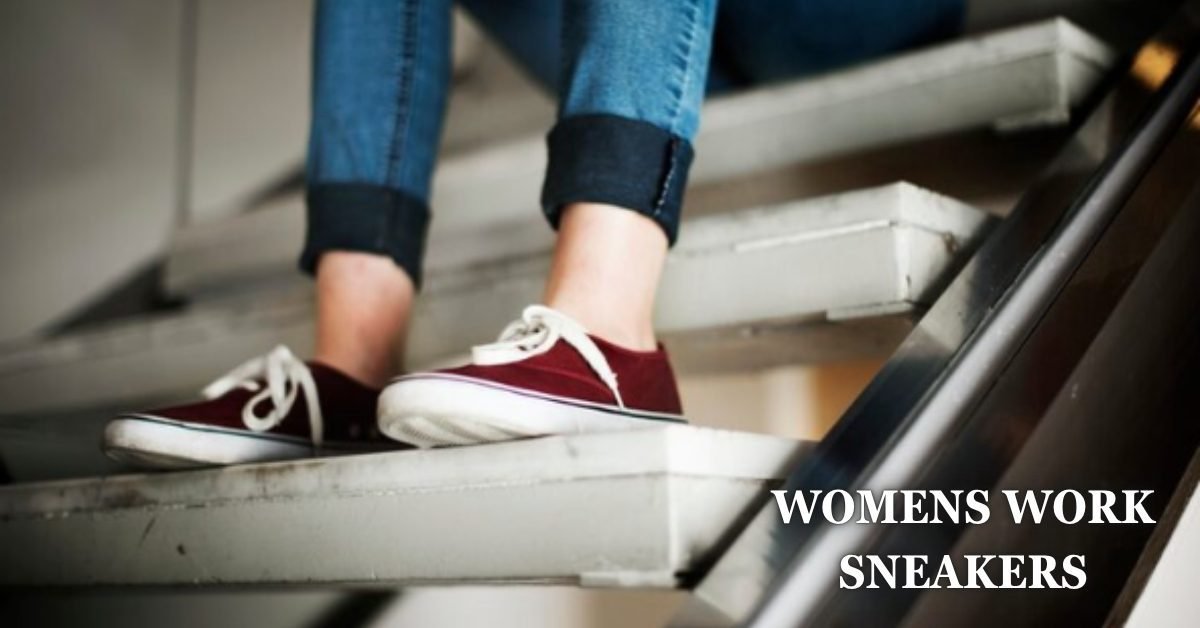
Women’s work sneakers earn that name through real slip grip, arch support built for hours of standing, and a toe box that doesn’t crowd your feet by hour six, not just a running shoe with a plainer colorway. This guide breaks down which features actually matter for a full shift, where most “slip-resistant” claims fall apart under real testing, and how to pick a pair that still looks pulled together next to office pants or a uniform polo. You’ll get specific picks by job type and budget, a real explanation of what slip resistance ratings mean, and a styling section for anyone who needs the same sneaker to work a shift and run errands afterward. By the end, you’ll know exactly what to check before buying instead of guessing from a product photo.
The Direct Answer
Good women’s work sneakers combine a slip-tested outsole, a firm heel counter, and cushioning rated for all-day wear rather than short runs. Look for a wide enough toe box to prevent bunion pressure, breathable mesh or knit uppers, and a genuine ASTM F2913 slip rating if your floors get wet or greasy. Budget $65 to $170 depending on brand and certification.
What Actually Makes a Sneaker a Work Sneaker
A running shoe and a work sneaker solve different problems, even when they share the same cushioned midsole and mesh upper. Running shoes are tuned for forward motion and shock absorption on a fairly predictable surface, while a shift on your feet involves standing still, pivoting, bending, and covering uneven or wet flooring for eight to twelve hours straight. That difference shows up most in the outsole tread pattern and the heel counter, the stiff cup around the back of the shoe that keeps your foot from sliding side to side during quick turns.
Arch support matters more here than most shoppers expect going in. A shoe with a flat, unstructured footbed feels fine for the first hour of a shift and starts causing real fatigue by hour four, especially on concrete or tile. Cushioned foam alone doesn’t fix that gap, since foam absorbs impact but doesn’t hold your arch in a neutral position the way a molded footbed or a supportive insole does.
Breathability tends to get treated as a comfort extra rather than a real requirement, which undersells how much it affects a long shift. Feet swell over the course of a workday, and a mesh or knit upper gives that swelling somewhere to go without the shoe feeling tight by the afternoon. A fully synthetic, non-breathable upper traps heat and moisture instead, which is part of why so many all-day sneakers lean on engineered mesh rather than solid leather or vinyl.
The Feature Checklist Worth Actually Reading
Most product listings bury the details that actually predict whether a sneaker will hold up to a real shift. These five features are the ones worth checking before anything else, in roughly the order they matter for someone standing or walking most of the day.
- Slip-rated outsole: look for an explicit ASTM F2913 rating rather than the word “non-slip” alone, since that phrase carries no testing requirement behind it.
- Removable, supportive insole: lets you swap in orthotics or a specific arch-support insert without buying a new shoe.
- Reinforced heel counter: a firm back panel that resists collapsing when you press it with a thumb, which limits ankle roll during quick pivots.
- Wide or true-to-width toe box: enough room for toes to splay naturally, which matters even more on shifts with heavy standing than on shorter walks.
- Machine-washable or wipeable upper: relevant for food service, healthcare, and retail roles where spills and scuffs happen daily.
The Slip-Resistant Label Almost Nobody Verifies
The word “slip-resistant” shows up on nearly every work sneaker listing, and almost none of those listings explain what it actually measures. The confusion happens because slip resistance sounds like a fixed quality a shoe either has or doesn’t, when in practice it’s a specific, testable number that varies by brand and even by individual style within the same brand.
The real benchmark in the United States is ASTM F2913, a whole-shoe test that measures the coefficient of friction between an outsole and a flooring surface under dry, wet, and oily conditions. A shoe needs to hit a coefficient of friction of at least 0.40 on the standard test surfaces to pass the associated performance specification, and that pass or fail result is something a brand can state plainly if the shoe has actually been tested. The American Society for Testing and Materials publishes the details of how the test works, which is worth a skim if you’re buying for a genuinely wet or greasy floor rather than a dry retail aisle.
Once you know that number exists, the fix is simple. Check the product page or the brand’s spec sheet for an explicit ASTM F2913 rating rather than trusting a rubber-looking tread pattern in a photo, since plenty of sneakers marketed as grippy have never been through the test at all.
Matching the Sneaker to the Job
The right work sneaker changes a lot depending on what the job actually demands, and buying based on the word “work” alone skips the part that determines whether the shoe holds up.
Retail, Food Service, and Hospitality Shifts
Anyone moving between a dry floor and a spill-prone kitchen or stockroom needs a genuine slip rating more than any other feature on this list, since a fall on a wet floor is the actual risk being managed here. A firm heel counter also earns its keep on these shifts, given how much quick turning and reaching happens behind a counter or on a sales floor. Brands built specifically for this environment, rather than repurposed from a running lineup, tend to test every style against ASTM F2913 as a baseline rather than an upsell.
Healthcare and Caregiving Shifts
Twelve-hour shifts on hard hospital flooring put arch support and cushioning ahead of slip resistance for most healthcare workers, since most hospital floors are dry and regularly cleaned. A wide range of Hoka models built specifically for standing or walking all day covers this need well, and the Clifton in particular balances enough cushioning against a price that doesn’t punish someone replacing a pair every few months. Machine-washable uppers matter here too, given how often scrubs and shoes both need a real wash rather than a wipe-down.
Hybrid Office and Business Casual Days
Office roles that still involve real walking, between buildings, up stairs, or through a large campus, benefit from a sneaker built around comfort brands rather than a purely athletic silhouette. The washable, cushioned styles in Bzee’s comfort lineup work well here specifically because they read closer to a low-profile flat than a running shoe once you’re actually wearing them under office pants. A style with a cleaner toe shape and a low-key colorway tends to pass the sniff test in a business casual office in a way a bulky trail-style sneaker doesn’t.
Real Picks by Need and Budget
Actual model names and price ranges matter more here than vague style categories, since two shoes can both say “work sneaker” and land in completely different price and comfort tiers.
- Budget slip-resistant pick, around $60 to $75: Skechers Work-branded slip-ons, widely available at Famous Footwear and similar retailers, with a certified slip-resistant outsole aimed squarely at food service and retail.
- Mid-range all-day comfort, around $130 to $150: New Balance 880 or the Hoka Clifton, both offering genuine arch support and cushioning without pushing into premium pricing.
- Premium standing-shift pick, around $160 to $170: Hoka Bondi, with noticeably more foam underfoot for concrete-heavy shifts that run past eight hours.
- Business casual crossover, around $150 to $200: Cole Haan’s sneaker line, which trades some of the cushioning depth of a pure comfort shoe for a silhouette that pairs cleanly with tailored pants.
- Certified slip-resistant hospitality option, around $95 to $130: Snibbs’ front-of-house styles, ASTM F2913-certified and built lighter than most safety-shoe alternatives.
Styling Work Sneakers So They Read as Business Casual, Not Gym Wear
A sneaker with real cushioning can still look intentional next to office clothes if the rest of the outfit accounts for its shape. Straight or slightly wide-leg trousers balance a thicker sole far better than a skinny or cropped pant does, since a narrow hem next to a chunky sneaker draws attention to the mismatch instead of smoothing it out. This is the same balancing act that works for any thick-soled sneaker, from a running shoe to a comfort brand’s daily style.
Color choice does more work than most people expect in an office setting. A neutral pair in white, black, or grey slides under structured trousers or a midi skirt without competing with the rest of the outfit, while a bright or heavily branded colorway reads more casual regardless of how supportive the shoe actually is underneath. Clean, unscuffed uppers matter just as much as color, since a scuffed toe undercuts a polished look faster than the sneaker silhouette itself does.
Skirts and dresses pair more naturally with a lower-profile sneaker than a tall, chunky one, since a rounder toe under a hemline reads best when the sole doesn’t add too much visual bulk at the ankle. A blazer or structured cardigan on top does more to signal “business casual” than the shoe itself ever could, which is worth remembering on days when comfort has to win the footwear decision.
Conclusion
The single most useful habit here is checking for an actual ASTM F2913 rating before trusting the words “slip-resistant” on a listing, since that phrase alone guarantees nothing. Match the shoe to what your specific shift actually demands, wet floors call for a certified rating, long dry shifts call for arch support and cushioning, and pick a neutral colorway if the same pair needs to work under office clothes. Buy for the job, not just the word “work” on the box.
FAQ
Are sneakers actually appropriate for a business casual office?
Yes in most modern offices, as long as the style is low-profile, the color stays neutral, and the rest of the outfit includes tailored pieces like structured trousers or a blazer.
What’s the real difference between a running shoe and a work sneaker?
A running shoe is tuned for forward motion and shock absorption, while a work sneaker needs a firmer heel counter, a wider stance for pivoting, and often a certified slip-resistant outsole for standing or wet-floor shifts.
How often should work sneakers actually be replaced?
Most cushioned work sneakers lose meaningful support after six to nine months of near-daily wear, sooner for anyone on hard concrete floors or heavy standing shifts.
Are white sneakers practical for a work setting?
They stay presentable longer with a wipeable or machine-washable upper, but anyone in food service, healthcare, or a similarly messy role usually gets more mileage out of black or grey before scuffs and stains show.
Does “slip-resistant” always mean the shoe has been certified?
No, the term itself carries no testing requirement, so it’s worth checking for an explicit ASTM F2913 rating on the product page if the job involves wet or greasy floors rather than trusting the label alone.